Tuesday, 16 April 2013

Plate 9 - Iranian dove plate

I do believe I'm at plate nine now. I'm a bit late in posting this one, It's been out of the kiln for two weeks but in my excuse, your honour, is that I've been away on a field trip with the JMSS students to look at Volcanoes in Western Victoria. What could beat volcanos, scoria cones, the 12 apostles and all sorts of funky wildlife? No, not much, especially when you're being paid to examine these things!

So anyway...

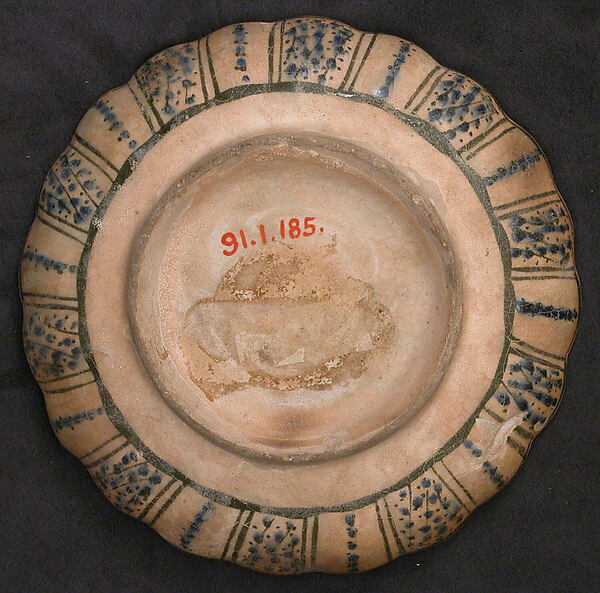
This plate is a little bit different from previous plates. Since experimenting with shading and dark-on-light and light-on-dark colour mixing I've been wanting to use the wavy bisque plates again. So I spent alot of time searching the Ashmolean and the Victoria and Albert and the Met Museums. They all have rather good search engines and very varied and beautiful collections. It is sometimes a bit frustraiting trying to find that perfect reference you remember seeing though, so I also suggest getting a Pinterest account.

I found the perfect extant piece for my experiment, no only does it have wavy edges, it also uses alot of green, a colour I've been meaning to experiment with for a while. This dish (figure 1) is from Iran, 14th century. The dish appears to be molded into a wavy, flat bowl shape. Though not a plate, I thought the imagery would convert nicely.
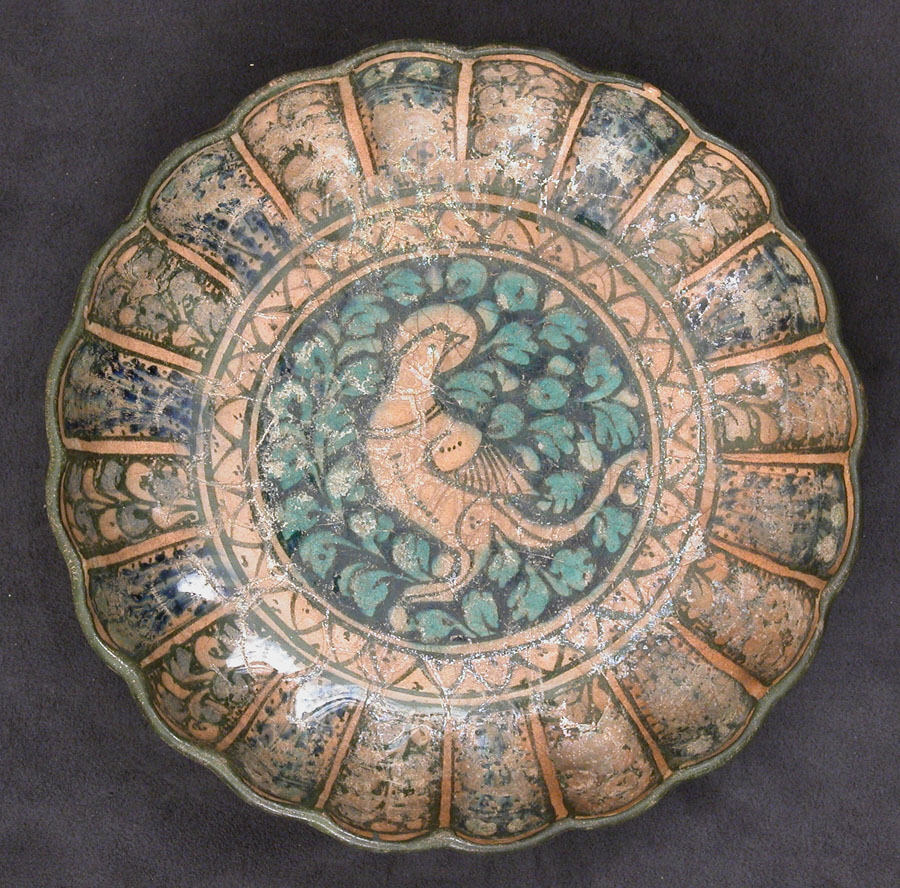

Figure 1: Extant dish from Iran, 14th Century. Beautiful greens and blues. Met Museum, accession number 91.1.185. It was acquired by the museum in 1891.

There are a couple of tricky things on this plate. The first being the solid background of vegetation behind the dove. On past plates I've had trouble with small white gaps appearing when I join two colours. There are three possible causes for this; I don't paint to the edge (pre-school mistake), I overlap the glaze, making it too thick and it pops off in the firing process, or the greylead underneath some shapes causes the glaze not to stick making it shed during firing. The easy solution to two of these uses the information from the drollery plates. I know that to make shading one must place dark on light. So I painted the light leaves first and then filled in the background with dark pigment hoping it would bake over the light pigment and fix cause number one. If cause number two was the case, all my leaves would now have a pretty white outline and I'd learn something new. For cause number three, I decided to risk using an eraser to ensure the greylead was as light as possible and I used pencil sparingly.

Problem number two is the pale blue shading in the border. At times it looks like water colour. This has to result from a single application of glaze which can be hard to apply to large areas. The original also has floral stems in every second edge panel. To ensure the appropriate painting of blue, I painted the stems, then covered the panel with the single layer of blue shading. Pre-firing (figure 2)  it didn't look to good but I was hopefully the drollery experiement result will win though again.


Figure 2: The dove plate pre-firing. The blue decorations on the sides look quite blobby and really detract from the clean lines of the center of the plate.


The firing was a success and I am very pleased with how this plate came out.
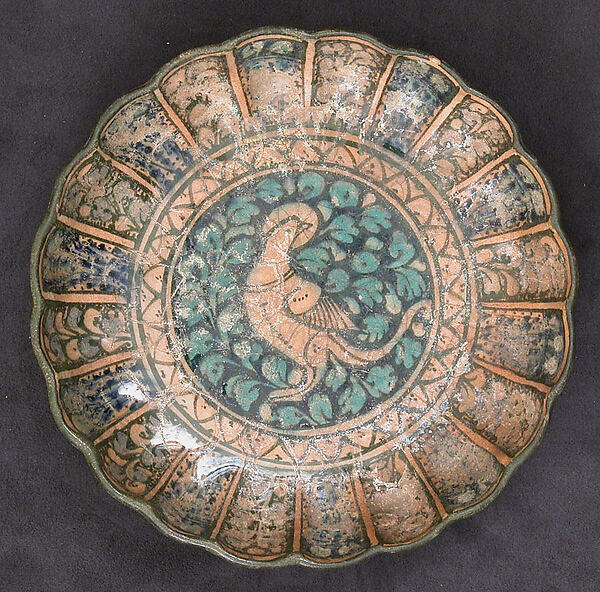


 Figure 3: Front of extant plate
Figure 4: Back of extant plate, a simplier floral plattern has been used to decorate the edge of the plate.


 Figure 5: Front of my copy. As this is a plate not a dish, the edge plaques aren't as long and elegant but I still thing the overall design is balanced.
 Figure 6: The back of my copy. I've replicated the edge decorations using black rather than dark green.


Summary: Success - no mystery white lines. Drollery experiments have showed their worth. I love the green colour.

Sunday, 7 April 2013

Plate 8 - part II


So I finished the plate, sent it off for baking and then promptly left for Rowany Festival. Ah, such a delightful event. This year we had fire, flood and tears. I left the boy with instructions to collect the completed plate and fly up with it. This he achieved (eventually) and the plate arrived intact and in all it's blue/green glory. I took it to the Laurels Prize Tourney (which is not a tourney, has no prize and the laurels don't compete) and showed off all my different pottery type experiments. I got some excellent feedback and ideas from laurels and non-laurels alike which I will post about at a future time.

Without further ado.. the plate.

Plate 8: The peacock, replica of a 12th c Syrian dish.

The plate turned out to be rather simple once the option for iridescence had been undocumented. I quite like the chevrons and wibbles that outline the body banding. The main difference between the original and my copy is the lack of a rim as the copy is a plate not a dish. The second difference is that the original has been repaired while my plate is currently in two pieces (it broke on the way home from Rowany somehow). The bits have been placed in Dash's mosaic pile and will hopefully see a new life at some point. I'm not to heartbroken over the breakage as the peacock hasn't made the top five favourite projects.

Monday, 18 March 2013

Plate 8 - part I


After a long break, mostly due to guilt at not finishing the two plates that languish in my kitchen cupboard, I have started decorating plates again. This resurgence of interested was prompted by a post by Aliette of Stormhold quite a few months ago. She posted a rather nice plate (13th Century I think) that sported a simple cat motif. While looking for the details of the original I stumbled upon something much more interesting, a 12th century peacock dish from Syria (Figure 1).

Fig 1: Peacock plate from Syria. 12th Century. Accession number: 29.160.17. Metropolitan Museum of Art


The back of the dish is plain and shows minor green staining. Interestingly, when stood 'flat', the plate appears to slant towards the left of the peacock. The rainbow luster around the edge of the plate and around the breast of the peacock bothered me initially. In my limited knowledge of ceramics, I associate that effect with modern day fairies or ballerina ceramics, not 12th century dishes. Looking at the unstained head of the peacock where the plate is the whitest there is no iridescent coloration. So, the two most likely causes are 1. a pigment used to outline the peacock and add decoration to the edge of the dish as been changed to create the irridescence, 2. groundwater or whatever stained the dish orange transported chemicals onto the plate to create the irridescence.

Cause 1 - pigment conversion
I have sifted through the Met's Syrian 12th century ceramic collection and found a fragment of a bowl (Figure 2) featuring a bird which has a similar white outline of the wings and features to the peacock. Given there is no trace of a decorative motif on the rim of the peacock plate this suggests that the void around the wing was intentional not the result of alteration of pigment causing the iridescence.

Fig 2: Fragment of a bowl. late 12th - first half 13th century. Composite body, underglaze painted. Syria. Accession number: 1978.546.9 The swan (?) depicted has voids outlining it's primary leg and wing.


Cause 2 - pigment discoloration
I have examined the images of most of the Met's Syrian ceramic collection and have found others with the iridescent staining (Figure 3 and 4). Both plates feature blue and green images similar to the peacock in colour. The Faun? (Figure 4) has the best example of irridescence as it only appears on areas that also exhibit orange staining. The likely cause of the iridescence is groundwater interacting with the underglaze chemicals (copper?) and causing the staining.

Fig 3: Syrian (Raqqa) plate featuring a Sphinx. late 12th- first half 13th century. Made out of stonepaste, under-glaze painted under a transparent, greenish colorless glaze. Accession number: 13.219.1. Metropolitan Museum of Art.

Fig 4: Syrian (Raqqa) plate featuring a faun? Stonepaste, under-glaze painted. Accession number: 56.185.5. Metropolitan Museum of Art.


So. Having made the conclusion I can ignore the iridescence, I can now happily paint a white plate with a beautiful blue and green peacock.

Wednesday, 13 March 2013

Islamic Dragons

Document delivery via Monash University is a wonderful thing. You simply click on the book you want and they eventually deliver it to a library near you. Unfortunately it isn't always as quick as one would like. Take for example, todays book: The Dragon in Medieval East Christian and Islamic Art by Sara Kuehn (ISBN: 0929-2403 / 9789004186637). It arrived recently and I can't for the life of me remember why I had it. I suspect I ordered it because I was planning on entering an A&S competition that featured images of Wyvyrns and I wanted to find one that suited my persona.

Anyway, I've flipped through the collection of articles in this book and here are some of the best images for your consumption:

A winged dragon with forelegs. Buckle of a belt, Mongl Empire, Astrakhan region. Probably 13th century, Silver, gilding, inlay in a black substance (niello?) Length 6.3 cmm width 3.1 cm. St Petersburg Hermatiage, inv. no. SO-762 . (I really really like this one!)

Confronted pairs of winged dragon tailed dragons with forelegs. Detail from a candlestick base, the Jazira. Thirteenth century. Copper alloy, silver inlay. Metropolitian Museum of Art. Inv. no. 91.1.561.


 A musician with a dragon-headed stringed instrument. Wall painting. Panjikent (Tajikistan). 8th century. Dushanbe National Museum.

Confronted dragon-headed birds with interlaced necks. Missal, Armenia. 9th or 10th century. Ejmiatsin, State Library. MS 958 fol 10.

Wednesday, 6 March 2013

Leeching around


I've just come back from a week long field trip with JMSS. It was a lovely week with 10 exceptional year 10's. They hadn't done any geology before but they were quite interested and asked some great questions. We went to Buchan, toured the limestone caves and examined the fossils at potholes reserve. Buchan is a lovely little town. I've been there a number of times with the 2nd years and I can never get sick of going on the caves tour.

Stalactites and stalagmites in the Royal Cave, Buchan Reserve.


On the second day we drove to Inverloch and looked at the fossilized forest and the dinosaur dreaming fossil evacuation site. The dinosaur dreaming site is a world class fossil site where they've uncovered birds, mammals and even a Tyrant dinosaur. Jim found some beautiful examples of rip-up clasts and got all excited about them. Sedimentologists - go figure.

On day three we went to Yanakee then to Wilsons Prom and climbed Mt Oberon. The prom is a beautiful granitic batholith which has some lovely pink outcrops. We collected sand from Squeeky beach but more importantly, we got some mudstone samples the park rangers had used as road base. They feature a lovely green mineral (still to be identified, I'm holding out for variscite). Apparently they're from the Fish Creek Quarry, but this requires further investigation.

We finally went to Bendigo and took a tour of the Central Debora mine. The old workings are quite interesting and the honeycomb of tunnels under Bendigo are immense. Determining the best pumping methods to remove the arsenic tainted water would be a unique problem.
On the way home from Bendigo we stopped by Chewton to pan for gold. Unfortunately the creek was so low the water was stagnet and manky. Unfortunately for the students that is. Fortunately for me this left a beautiful refolded recumbent fold on view. I got very excited much to the amusement of the children. I took some photos and I plan on going back to do a proper survey.
As we were leaving one of the students called me over. She'd spotted a leech and knew I was interested in collecting them. She helped me hand catch it and in the process disturbed a larger one. We caught it, bottled them and now they sit on my kitchen table while I try and work out a more permanent home for them.  They're massive tiger leeches. I've caught them for my housemate to use in his presentations on Medieval Medicine at schools. They'll make great props and only have to be fed every 50-70 days.


Alpha is about 5" and Beta is about 2" - MASSIVE leeches.

Sunday, 3 February 2013

The Sumpardaya Sun - possible reference trove

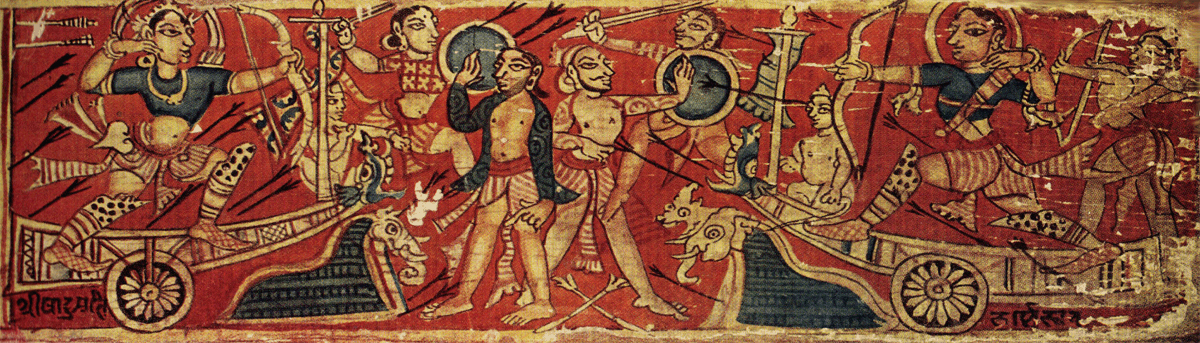
 Example of one of the minitures found in the articles on Vedic Art. The Battle between Bahubali (Balarama) and Bharat Painted wooden book cover (Patli) Jain School, Western India, 12th c. On the left, women in chariots? One is shooting a recurve bow the other wielding a sword and round shield.


I have just stumbled upon the Sampardaya Sun. It appears to be a website started by a Hare Krishna group which has evolved into a Vaisnava centric news group. I've found a number of scholarly articles on this site. While I tend to cross reference references out of habit (scientists in my field can be rather biased and it's good practice to present information as neutrally as possible, especially on the interwebs where people with a sad lack of persistence tend to believe anything with an authoritative voice), I've found some good starting articles:

The murals of Kerala Pt 1, 2 and 3.
Murals at Kerala have been dated back to the 8th century, and murals continue to be created today. Part 1 has a good summary history of Kerala, Part 2 discusses techniques used such as wall perparation, Part 3 discusses the history of the art forms found at Kerala.


Vedic Art: Indian Miniature Painting (the original link and reference material)
30 posts each with up to three images. Most of the later posts show images out of period, however they're worth a look simply due to the beautiful detail achieved by the artists. The first post:


The index for later perusal:

http://www.harekrsna.com/sun/features/features.htm


(for those, like me, who had no idea what Vaisnava was, Wikipedia states that Vaishnavism a major branch of Hinduism.)

Thursday, 31 January 2013

St John Website roundup


St John Website roundup:

http://www.stjohn.org.au/
St John Ambulance Australia website.

http://www.orderofstjohn.org/
Order of St John website.

http://www.museumstjohn.org.uk/
The Museum of the Order of St John in England.


http://alphaom.tripod.com/tmp/imagesJ.htm
This site has a very good list of different saints and links to a number of images. Some of the links are dead and the dates are imprecise but present.

Sunday, 27 January 2013

THE St John of St John Ambulance

Bingo, we have confirmation that my hunch was true, the Order of St John was named after St John the Baptist, the original St John. The guy who lost his head when Salome asked for it on a platter. Like Jesus, St John the Baptist was a popular figure to draw, paint and sculpt in the middle ages. So Elizabet Hunter has many images to pick from. I'd suggest not using the ones that feature Salome with Johns head on a plate.

(I got all excited and started browsing my collection of religious images so I could offer Elizabet a selection of the ones I find more visually pleasing. I really wanted to see if Cranach had painted one of John with his head still on as Queen Eva and King Felix are having a landschneckt themed reign and I like both Cranach's depictions of this garb. Then I read some more about the Order of St John, hoping there'd be some good images I haven't seen before and found out I'm looking in all the wrong places.)


According to a paper by Dr Ian Howie-Willis who is a Knight of St John and member of the St John Historical Society, St John the Baptist wasn't the original patron St Johns Ambulance.

"The Order has always been called 'The Order of the Hospital of St John of Jerusalem' but in the early years the 'St John' in the title was St John the Almsgiver. This John was a Cypriot who became Bishop of Alexandria where he became famous for spending the church's wealth in aiding poor refugees. His boast was that 'I found the treasury of my church full but left it empty'. The early boast of (The order of St John) is it's pre-military days was something similar. The Blessed Gerard, found of the Order, and his brethren used to say that the Order existed to serve 'Our Lords the Sick and Our Lords the Poor'. John the Almsgiver was therefore an excellent role model for the Order.
Some of Gerad's monks disagreed, however. As their Hospital became more influential and powerful after they were reconstituted as a separate Order in 1113, they believed a more prestigious patron saint was required. And, so one Saint John was dropped in favour of another - the Baptist in place of the Almsgiver. In addition, after the First Crusade, the brethren occupied the former Greek Orthodoc monastery of St John the Baptist so perhaps this was less confusing for everyone." (Howie-Willis, 2010).

One of the few paintings depicting the original patron: St John the Almoner. Painted by Titian (1490-1576). Currently located in San Giovanni Elemosinario, Venice.


The St John the Almsgiver that Howie-Willis (2010) refers to may be the St John listed in Wikipedia as John the Merciful (died c. 610), Cyprian Patriarch of Alexandria. Also known as John the Almsgiver, John the Almoner, John V of Alexandria, John Eleymon, and Johannes Eleemon. St John (the Almsgiver) is commemorated on the 12th of November, (details). There are a lot fewer images of St John the Merciful than there are of St John the Baptist from the middle ages due to a number of reasons. 1) John the Baptist, as the original John and cousin of Jesus, is much more of a superhero character and is more well known due to his inclusion in the Bible, 2) the ultimate charity of St John the Almsgiver probably didn't sit that well with members of the church who were trying to accumulate wealth and power so I doubt they would have promoted his image and through this, his cause.

There are a number of easily searchable images from google that come up for St John the Merciful however many of the ones that look medieval are in fact modern icons for the Greek Orthodox church. Finding medieval images is going to be a challenge, especially finding an image that can represent the St John Ambulance boys at Rowany Festival. I really want to find one where he is giving alms to a clearly sick person.


Further reading:

Howie-Willis. I, 2010, St John the Baptist: The Patron Saint of the Order of St John, Proceedings of the St John Ambulance Historical Society of Australia, Vol 10.

The cross and founder of the Order of St John

A woodcut (15th/16th C?) of medical treatment by the Order of St John. I got this image from the Museum of St John webpage. There is no date on this woodcut so I'm guessing by the styles of clothing depicted. A figure on the left of the woodcut has a St Johns cross sewn onto his garment.


The cross of the Order

"The cross of the Order of St John is the subject of on-going discussion as to its origin and the date it became the cross of the Order. It is widely believed to have been adopted as a result of the funds provided for the rebuilding of the hospital in Jerusalem by the people of the Italian state of Amalfi, which was the only western European state trading in the Middle East. At the time of the formation of the Order in the 11th century, the arms of Amalfi was a white, eight-pointed cross on a blue background. The Blessed Gerard, founder of the Order of St John, appears to have adopted a black habit bearing an eight-pointed star in white on the left breast, prior to 1113, when Pope Paschal II first officially recognised the Order. What is certain is that this form of cross is now usually referred to as the Maltese cross, a consequence of the Order’s 268 year residence on the Island of Malta."
( Crowther. I, and Goodman. M, 2012, Grand Masters of Malta: Their heraldry and coinage, Historical Society of St Johns Ambulance, Proceedings of the St John Ambulance Historical Society of Australia Volume 12.)

Members of St John Ambulance Australia wear the eight pointed badge, the St John Cross all over their uniforms and cars etc. They have a heraldic device as well, the St John Shield or Arms of the Order. A square white cross on a scarlet background (A cross argent, on a field gules?)


We can  probably assume that any St John born after the start of the Order is not our St John. We can also assume, that as the Order was founded by The Blessed Gerard, that St John himself is dead so any St John living past 1113 is not our man either.


John the Evangelist (born 1st century), speculated author of the Fourth Gospel, traditionally identified with John the Apostle
John of Patmos, author of the Book of Revelation, traditionally identified with John the Apostle and Evangelist
John the Baptist, preacher, ascetic (c. 5 BC – c. 30 AD), and reported baptizer of Jesus Christ
John the Wonderworking Unmercenary (d. c. 304), Egyptian or Mesopotamian healer
John Chrysostom (c. 340 – 407), Antiochene Archbishop of Constantinople
John Cassian (360 – 435), probably Scythia-Minor priest and abbot
John and Paul (d. 362), Roman martyrs
John of Egypt (d. 394), Egyptian hermit
John the Silent (452-558), Bishop of Taxara
Pope John I (died 526), Italian pope
John of Ephesus (507-586), Syrian ecclesiatical historian
John Climacus (525–606), Syrian or Byzantine monk and abbot
John Scholasticus (died 577), 32nd Patriarch of Constantinople
Patriarch John IV of Constantinople (d. 595), also known as John the Faster, first Ecumenical Patriarch
John the Merciful (died c. 610), Cyprian Patriarch of Alexandria
John of Damascus (676–749), Syrian monk and priest, also known as John Damascene
John of Beverley (died 721), Angle bishop
John of Pavia (died 813), Bishop of Pavia
John of Rila (876–946), Bulgarian priest and hermit
John Gualbert (985-1073), Founder of the Vallumbrosan Order
John Theristus (1049-1129), Italian benedictine monk

John of Pulsano (1070-1139), or Giovanni di Matera, Italian abbot

John of the Grating (1098-1168), Bishop of Aleth

John of Matha (1160–1213), French priest; founder of the Trinitarian Order

John of Meda (died 1159), Italian priest


Saturday, 26 January 2013

Researching all the St Johns

 Burning of St John (also known as The Legend of the Relics of St. John the Baptist) by Geertgen tot Sint Jans (1484), one panel of a triptych which has been cut into two pieces, currently in Vienna. (Some good information about this painting, Snyder, James, E. 1960. The early Haarlem School of Painting: II. Geertgen Tot Sint Jans The Art Bulletin, Vol 4, 1960. The priests? Knights? featured in this image all wear black robes with the white cross of St John, however none of the beasts featured in the current heraldry are present.


Since there are so many possible patron saints of St Johns Ambulance Australia, I'm starting my research into the organisation seeing how far back I can trace it. The further back I can follow it, the more patrons I can knock off the list.


I've trolled through a number of the St Johns Ambulance Historical Society proceedings and have discovered a number of key figures in their history, mostly leaders / founders of order chapters in different locations. I believe some of these figures are some of the St Johns listed in Wikipedia so I can scrap them from the list. They are: St John at Acre (Guerin de Montaigu (1207–1228), 13th Grandmaster), St John at Rhodes (Pierre D’Aubusson (1476–1503)), St John of Malta (Philip Villiers de L’Isle Adam (1521–1534), Pietro del Ponte (1534–1535), Didier St Jaille (1535–1536), John de Homedes (Juan de Omedes) (1536–1553), Claude de la Sengle (1553–1557)).

So basically, any St John post 1207 is now off the list.


John the Evangelist (born 1st century), speculated author of the Fourth Gospel, traditionally identified with John the Apostle
John of Patmos, author of the Book of Revelation, traditionally identified with John the Apostle and Evangelist
John the Baptist, preacher, ascetic (c. 5 BC – c. 30 AD), and reported baptizer of Jesus Christ
John the Wonderworking Unmercenary (d. c. 304), Egyptian or Mesopotamian healer
John Chrysostom (c. 340 – 407), Antiochene Archbishop of Constantinople
John Cassian (360 – 435), probably Scythia-Minor priest and abbot
John and Paul (d. 362), Roman martyrs
John of Egypt (d. 394), Egyptian hermit
John the Silent (452-558), Bishop of Taxara
Pope John I (died 526), Italian pope
John of Ephesus (507-586), Syrian ecclesiatical historian
John Climacus (525–606), Syrian or Byzantine monk and abbot
John Scholasticus (died 577), 32nd Patriarch of Constantinople
Patriarch John IV of Constantinople (d. 595), also known as John the Faster, first Ecumenical Patriarch
John the Merciful (died c. 610), Cyprian Patriarch of Alexandria
John of Damascus (676–749), Syrian monk and priest, also known as John Damascene
John of Beverley (died 721), Angle bishop
John of Pavia (died 813), Bishop of Pavia
John of Rila (876–946), Bulgarian priest and hermit
John Gualbert (985-1073), Founder of the Vallumbrosan Order
John Theristus (1049-1129), Italian benedictine monk
John of Pulsano (1070-1139), or Giovanni di Matera, Italian abbot
John of the Grating (1098-1168), Bishop of Aleth
John of Matha (1160–1213), French priest; founder of the Trinitarian Order
John of Meda (died 1159), Italian priest
John Kukuzelis (1280-1360), Bulgarian composer, singer and reformer

John of Nepomuk (1340–1393), Bohemian vicar general of Jan of JenÅ¡tejn

Giovanni da Capistrano (1386–1456), Italian friar; summoner of European troops for the 1456 siege of Belgrade

John Cantius (1390-1473), Polish priest and theologian

John of Sahagún (1419-1479) Spanish priest

John Fisher (c. 1460 – 1535), English cardinal and martyr

Juan Diego (1474-1548), first Native-American saint

John Houghton (martyr) (c. 1480 – 1535), English abbot and martyr (one of the Forty Martyrs of England and Wales)

John de Ribera (1532-1611), or Juan de Ribera, Bishop of Valencia

John Stone (martyr) (died 1539 / died 1539), English friar and martyr (one of the Forty Martyrs of England and Wales)

John of God (1495–1550), Portuguese friar; founder of the Brothers Hospitallers of St. John of God

John of Avila (1500–1569), Spanish Jewish converso priest, missionary and mystic

John Payne (martyr) (1532–1582), English priest and martyr (one of the Forty Martyrs of England and Wales)

John Leonardi (1541–1609), Italian priest; founder of the Clerks Regular of the Mother of God of Lucca

John of the Cross (1542–1591), Spanish Jewish converso friar, priest and mystic; joint founder of the Discalced Carmelites

John Boste (c. 1540 – 1594), English priest and martyr (one of the Forty Martyrs of England and Wales)

John Rigby (martyr) (c. 1570 – 1600), English martyr (one of the Forty Martyrs of England and Wales)

John Roberts (martyr) (c. 1570 – 1610 / c. 1570 – 1610), Welsh priest, Prior of Saint Gregory's (one of the Forty Martyrs of England and Wales)

John Sarkander (1576–1620), Polish priest and martyr

John Ogilvie (saint) (1579–1615), Scottish priest and martyr

John Jones (martyr) (16th century – 1598), Welsh priest and martyr (one of the Forty Martyrs of England and Wales)

John Macias (1585-1645), Spanish missionary

John Southworth (martyr) (1592–1654), English priest and martyr (one of the Forty Martyrs of England and Wales)

Jean de Brébeuf (1593–1649), French missionary and martyr (one of the North American Martyrs)

John Francis Regis (1597-1640), French priest

John Kemble (martyr) (1599–1679), English priest and martyr (one of the Forty Martyrs of England and Wales)

John Berchmans (1599-1621) Flemish seminarian

John Eudes (1601-1680), or Jean Eudes, French priest and founder of the Congregation of Jesus and Mary

Jean de Lalande (1615-1646), French missionary and martyr (one of the North American Martyrs)

John Wall (priest) (1620–1679), English priest and martyr (one of the Forty Martyrs of England and Wales)

John Plessington (c. 1630 – 1679), English priest and martyr (one of the Forty Martyrs of England and Wales)

John de Brito (1647-1693), Portuguese missionary and martyr

John of Tobolsk (1651-1715), Metropolitan of Tobolsk

Jean-Baptiste de La Salle (1651–1719), French priest; founder of the Institute of the Brothers of the Christian Schools

John Joseph of the Cross (1654–1739), Ischian friar, priest and Vicar Provincial of the Alcantarine Reform in Italy

Saint John Lloyd (died 1679), Welsh priest and martyr (one of the Forty Martyrs of England and Wales)


Helpful websites:

St Johns Ambulance Australia (a great group of people who volunteer their first aid assistance at many major events across Australia, I was a cadet in the organization many years ago - volunteer or donate today!)

Researching St John

The Heraldry of St John Ambulance Australia


It appears Elizabeth Hunter has something planned for the St Johns boys at Rowany Festival this year. As I had researched her popular dragon banner from two (?) years ago she's asked me to find an image of St John. The big question is, Which St John? Wikipedia has a massive list of them.

According to the St John Ambulance Historical society, "In the Nineteenth Century a group of citizens revived the Order of St John in England, drawing their inspiration from the example of the Knights of St John who in medieval times,". The order was involved in volunteer assitance for the sick. This movement was spread to Australia in 1884.  (St John Ambulance Australia). While important this history is far too current, and the Order of St John / Knights of St John are more relevant to our research. For those interested the Historical Society of St Johns Ambulance publishes a free history journal with some very detail articles on a range of topics, from language, to coinage, to the forefathers of the organisation

So we can safely assume that any St John post-1884 is not our man.

  • John Bosco (1815–1888), Italian priest and educator; founder of the Salesians of Don Bosco and the Salesian Cooperators
  • John of Kronstadt (1829–1908), Russian archpriest and synod member
  • John of Shanghai and San Francisco (1898-1966), also known as John the Wonderworker, Archbishop of Shanghai and San Francisco