Thursday, 30 October 2014

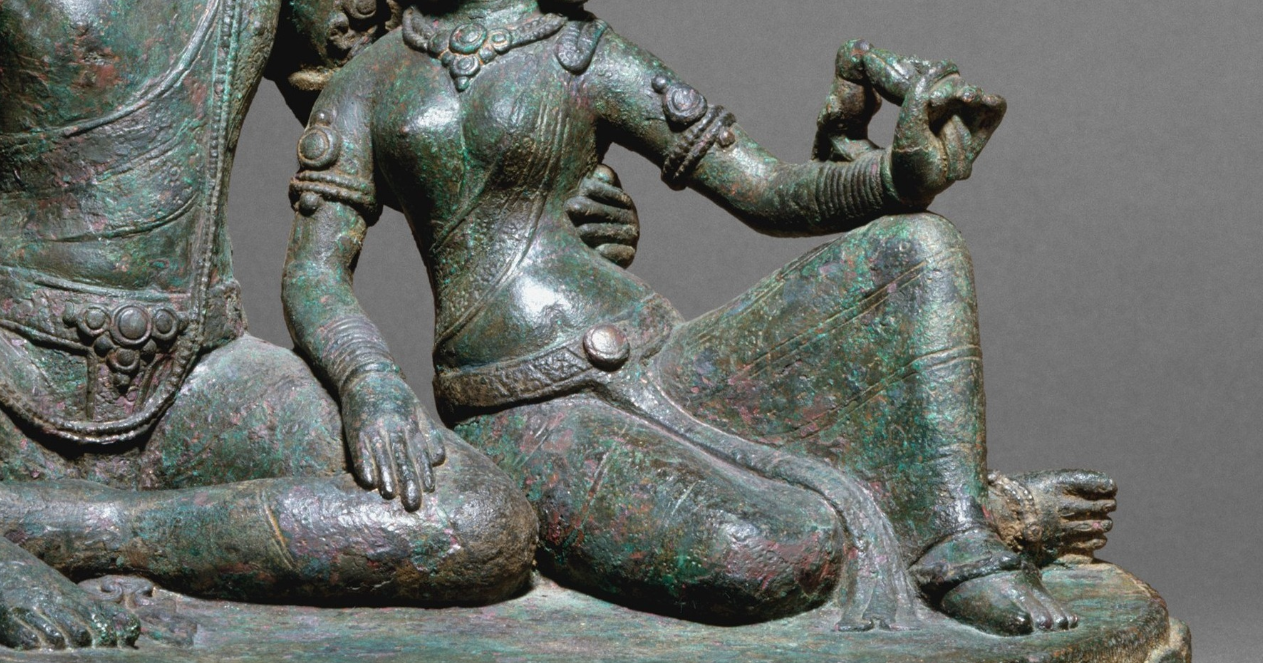
Pattern research for silk painted sari

Not amazing resolution, But I Love what the edge of the sari, it looks like dagging, or bling or maybe weights?  Standing Pavati, India, Tamil Nadu, Chola period, 11th century, copper alloy. Accession/museum number 1979.021, Asia Society


Standing Shiva and Parvati, India, Chola period, 13th century. Copper alloy, accession Number 2000.284.5, Met Museum of Art.

 Close-up of Pavati's garment with circular pattern. Centre of one looks like a 5 petal flower while a lower one looks like a swirl.


Not Indian but Indonesian (java). A posthumous portrait of a Queen as Parvati (detail). Eastern Javaneese, 14th century, Andesite, Accession number 2001.407. Met Museum. Her lower garment seems to be 100% decorated in interlocking geometric shapes/overlapping circles. This is possible blockprinted fabric such as that I've posted previously.

Detail of Shiva Seated with Parvati. Nepal (Kathmandu Valley), 10th centiry. Accession number 1983.563. Met Museum. Parvati's lower garment features horizontal stripes with pattern infill very similar to that of the cushion on which they recline (leaves? and flowers?)


Detail of Pavarti. 16th century, Tamil Nadu, India, Bronze. Accession Number 33.65.8. Met Museum. Lower garment is deocrated in a repeating pattern of concentric circles // flowers?


Detail of Shiva, Uma and their son Skanda (Somaskandamurti). Tamil Nadu, early 11th century, copper alloy. Accession number 1982.220.10 Met Museum. Uma's lower garment is decorated in a range of (non-repeating patterns) that feature circles.

Detail of Yashoda with the Infant Krishna. India, Tamil Nadu. early 12th century. Accession number 1982.220.8, Met Museum. Simple by comparison to previous images, this garment features a repeating pattern of dots forming a diamond and a circle linked with a chain of dots - lovely!

Detail of Shiva seated with Uma (Umamaheshvara), Thakuri dynasty, 11th century, Nepal, Copper Alloy. Accession number 1987.218.1. Met Museum. The garment here is badly corroded so I cannot make out much detail from the picture. Her drape appears to go over her shoulder and the lower garment seems to be decorated with small circles ringed by dots.


That's it for now because it's late and I have to work tomorrow.

Tuesday, 28 October 2014

Scribal things #2 - Going green

I hit a minor wall with my celtic scroll the other day. I decided to start with the device and then work out the colour distribution from there. I started by doing a test run of all the colours I currently have so I start with a good idea of what tones match the colours of the original Book of Kells. Then I hit a snag - green. The two greens I had were a light green and a dark green. I needed a brighter mid-green colour. and I don't want to mix my own, because I know inevitably I'll run out right before finishing and won't be able to match the colour. I've talked to a number of other illuminators and most of them remarked on the problems of getting a good green (mostly because they seem to need two coats).

In my travels back and forth this week I decided to acquire myself a range of greens rather than mixing them myself. If I find one I'm happy with this has the benefit of being consistent and I won't run the risk of running out of pigment as I work on this scroll.


These are all of the colours so far (dried) with their brands and colour name written next to them. I was hoping reno art - pale green would work well but like Reeves crimson it's sort of shiny so not suitable for my needs.

Thursday, 23 October 2014

Scribal things #1 - Book of Kells AoA scroll

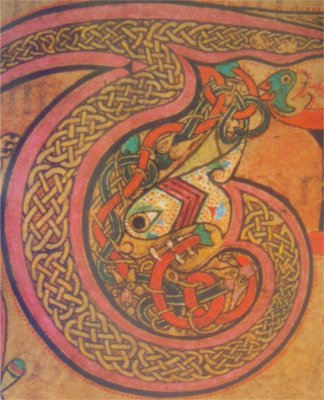
I'm now a member of the College of Scribes and I have been assigned an AoA to do. This AoA is for a lass who I'm not familiar with. Apparently she likes celtic things so I'm completing one of the Book of Kells blanks for her. The benefit of this is it's all block colours, so reasonably straight forward once I decide on a colour theme.

To start with I've researched the scroll - here's an example of a completed version on the Lochac scribes database. I've googled up all sorts of Book of Kells images (I've misplaced my Book of Kells book in the move) and have found some of the original reference material.

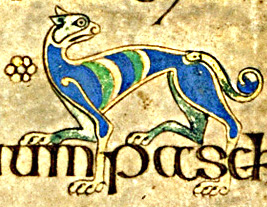
Folio 124r - lion on wikimedia.

and a close up:


And the dog from folio 111(r?)


So the question is: retain the colours of the originals and be all over the shop, or bend to more modern ideals and sort of colour co-ordinate with the device (green and white)?


Sunday, 12 October 2014

St Monicas ceramic class - results

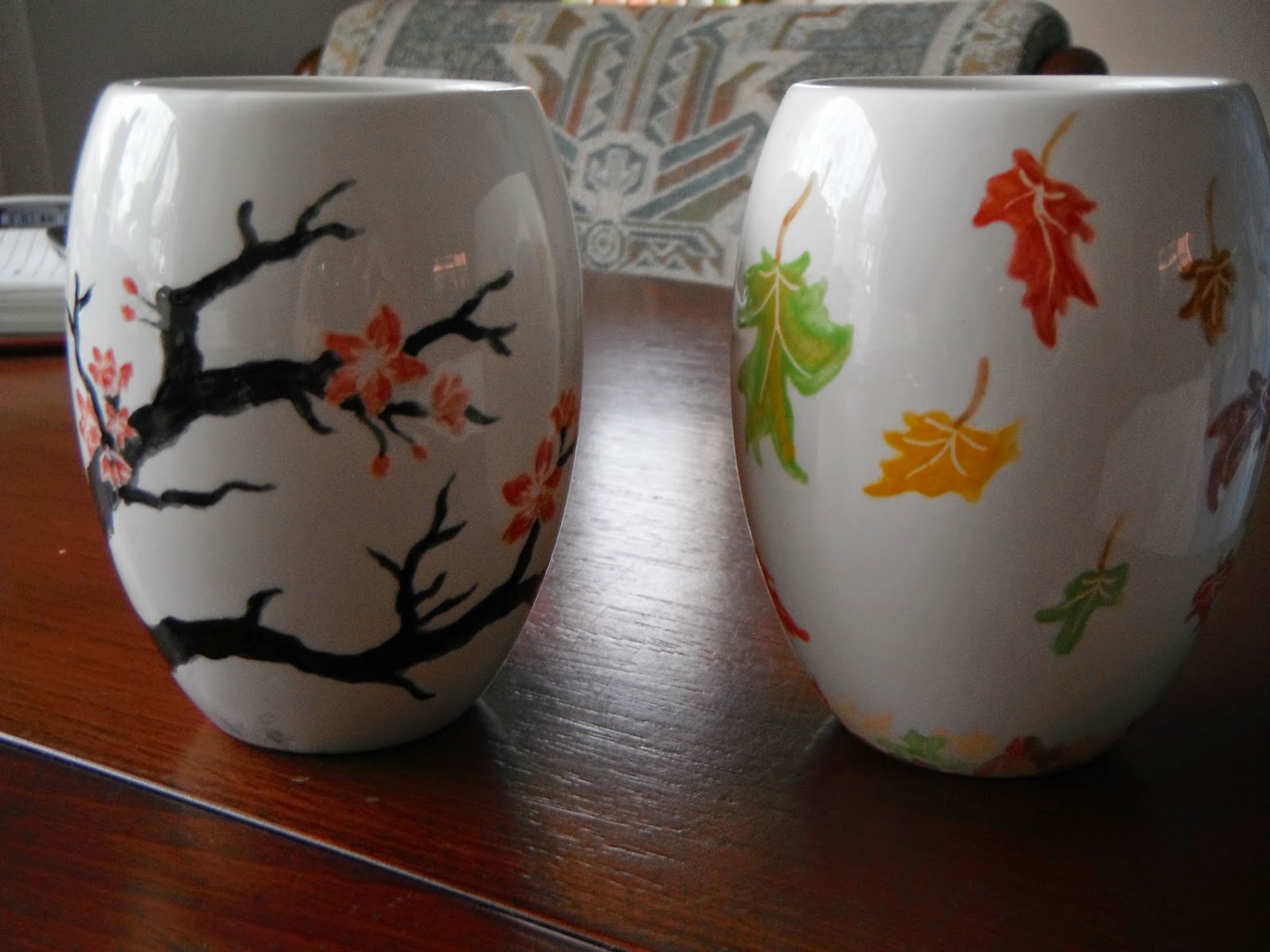
I did a trail run of my ceramic hands-on A&S class at St Monicas during the AGM three weeks ago. I ran this for three reasons, 1. Beth was about to give birth and wanted to make a pair to the octopus cup before the baby came and 2. I plan on running this at Krae Glas and Stormhold and needed to know how to format it. 3. We were having the AGM and it's good to provide quiet crafty activities while the paperwork gets sorted.

6 people ended up painting ceramic objects which I didn't anticipate. 3 cups (Beths is still to be fired) and three tiles (because I had them sitting around). Louisa's skills blew me away (the bamboo) and I especially like the cups by Janet and Vivien. Vee was also interested but couldn't settle on a design, so she's doing research until I run the Krae Glas session.


Pre-firing Post-firing


Things for next time:
  • Bring more bisque if possible - people standing around tend to want to join in.
  • Bring more examples to prevent artists-block
  • Supervise EVERYONE as the concept of "a little glaze" has multiple interpretations.
  • This is not a class for children unless they are supervised by their parents (especially younger ones)
  • Don't buy a pack of pencils just for the 6B, people are likely to utilise the wrong ones accidentally.
  • Don't feel awkward about charging for materials.
  • Explain dark over light shading and three layers multiple times, with examples if possible.
  • Don't plan on doing any work yourself.


Friday, 10 October 2014

Sicilian Acquisitions

The items I bought while in Sicily

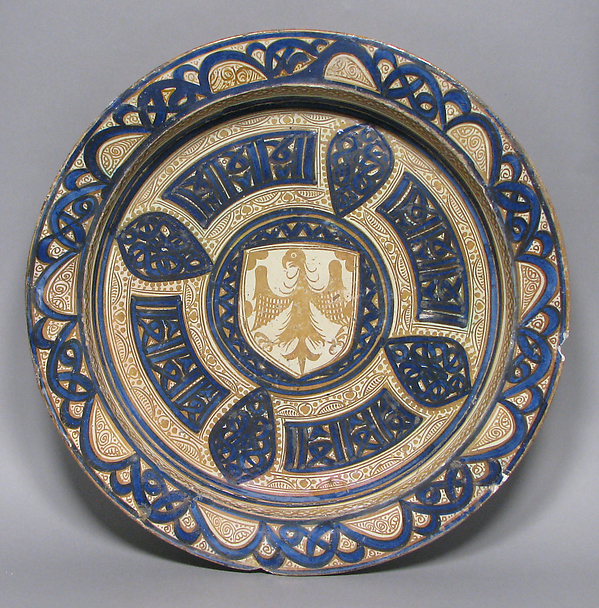
The artist is replicating a style of tin-glazed earthenware from Manesis, in Spain such as this example below. I am quite taken with the style and wish I had the funds, and baggage limit to acquire more.


Wednesday, 1 October 2014

Project 36 - Aneala Plates

Another commission from the Crown. Her Majesty requested gifts for the incoming Baron and Baroness of Aneala. Rather than make them items with their personal device (which I'll make for their step down), I thought I'd make them some Baronial regalia. More specifically, plates. I haven't glazed a plate in a while, concentrating more on cups and tiles so I thought it'd be interesting.

I started by documenting a design. This was quite a challenge as I wanted an extant item that displayed heraldry but I couldn't do anything too complex as I had only a month. As it was I picked up the final piece and posted it to Kilic the Thursday before the step up/down. Australia post sucks though, so it didn't arrive in time. Also, thanks to Kilic who bravely agreed to do the random stranger on the phone a favour and accept the package at his house.

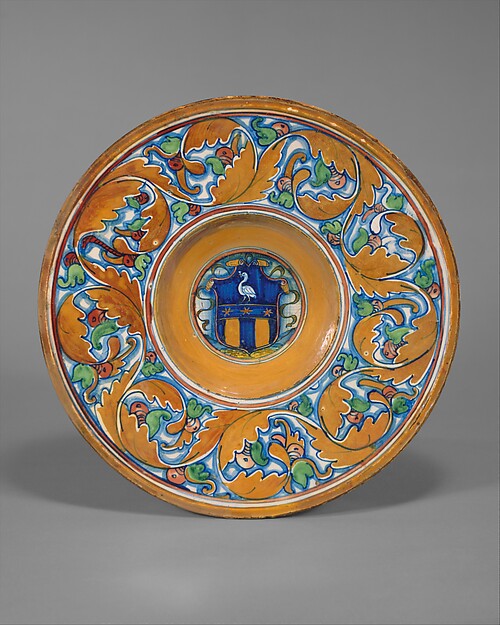
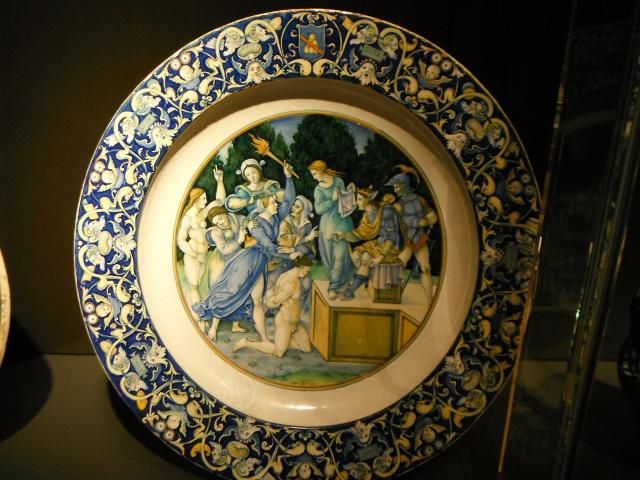
Plate (tondino) located in The Met Museum. 1525-30.
Italian, from the workshop of Maestro Giorgio Andreoli. Accession number: 1975.1.1092


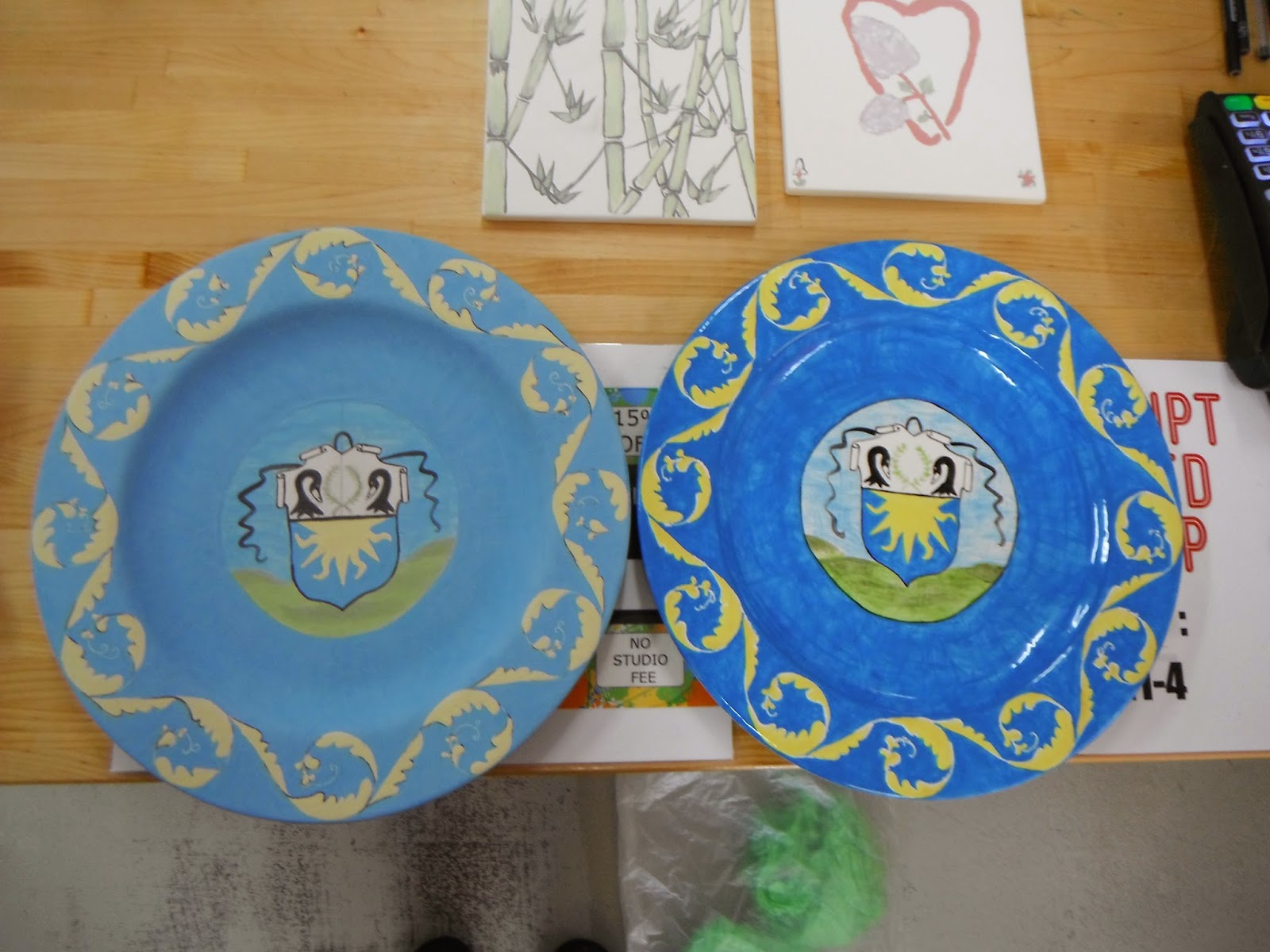
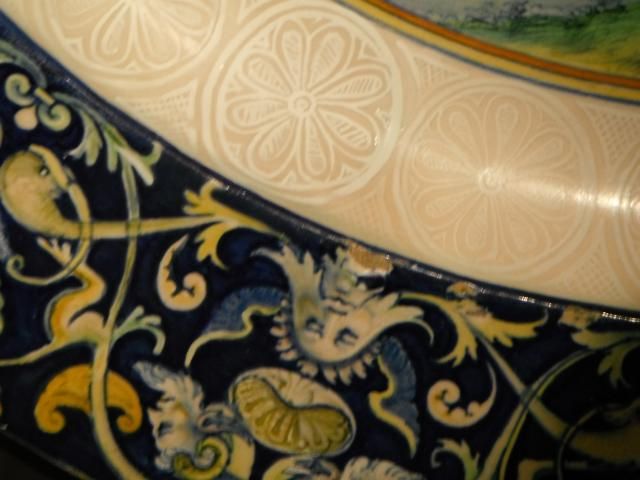
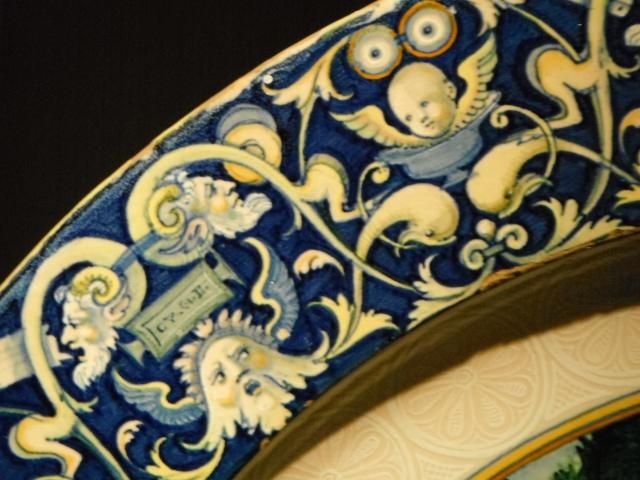
I used many of the elements of this plate. I did away with the berries and smaller green tendrils. Originally I was going to paint the side of the plate blue, the background green and the acanthus yellow but I realised that there wasn't sufficient contrast between the yellow and the green so it all became blue. On the back I made concentric circles of yellow (centre), blue/turquoise, and green. I tried to replicate the white highlights by scratching white lines in but the yellow isn't orange enough to make the contrast sufficient in this image. I'm not 100% happy with these plates (will I ever be?) but on the upside, Aneala now has baronial plates that are microwave and dishwasher safe. One Barony down, many to go.

Completed plates. Left - prefired, right - post firing.

Tuesday, 30 September 2014

Reannag Teine

An Atlantia I know, Glaukos the Athenian linked an interesting site on the book of faces today - a pottery studio in California which seems to specialise in SCA stuff. Seems they need votes to qualify for a local grant so they can expand their studio. I totally support artists like this (and wish I could buy more of their work). I've attempted to vote for them to receive this grant but it doesn't want to let me, possibly because I'm Australian? Anyway, the voting at this stage is just to get them to consideration. From the bios of the past winners, they're up against a challenge and really need to sell their product, their research and their involvement in the community.

http://www.reannagteine.com/

This family team in California are doing many of the things I'd like to try. They have the advantage of being a team, and having a resident potter. Their designs are lovely and I cannot believe how cheap they are selling some of their products for!


Their attempt at the 1480 Faenza Peacock (on right)

Saturday, 20 September 2014

Project 35 - Aneala cups

Hey there, long time no post!
I've been working on some gifties recently, so haven't been able to post progression pics or really anything until after they've been handed over. So ceramic project number 35: Aneala cups.

HRM Liaden asked me to make some items for the Baron and Baroness of Aneala who are stepping down today (this post is specifically scheduled so as not to ruin the surprise). The Baron and Baroness are Kilic ibn Sungur ibn al-Kazganci al-Turhani   and   Branwen of Werchesvorde. Given they're on the opposite side of the country (it'd take me at least two days to drive there), I don't really know these folk. So I turned to the trusty internets. (turns out they're both Laurels - eep)

First up I googled Branwen of Werchesvorde. From the Lochac Laurels website "Member for roughly 25 years, Current Baroness of the Barony of Aneala. Master Rank in the College of Scribes, holds Scribal classes in corrupting novice scribes. Is married to the wonderful Dede (Master) Kilic who has in turn corrupted her into Middle Eastern culture. Master Rank in the Lochac Cook’s Guild.
Her Excellency Baroness Mistress Branwen is highly active in the scribal arts, and has interests in Middle-Eastern culture and pavilion-making, textiles as in weaving, dyeing and printing, learning embroidery, leatherworking, glass bead making."

Generic middle eastern - perhaps I could make some more of the lovely Iranian things I've been contemplating?

To see if I could get something more specific I googled Kilic and happily I found a bunch of information on his persona. From the Aneala website: "Kilic ibn Sungur ibn al-Kazganci al-Turhani is a Turkic nomad from the Early 13th Century. Kilic was bought from his parents at market in Samarkand and raised as a Ghulam or slave soldier. He served his master well and when his master passed away took service with a number of different rulers, warrior lords and merchants particularly in the unsettled regions of Rum. Like any good nomad he has become a jack of all trades and has tried his hand at various crafts including woodwork, leatherwork, metalwork, armouring, tent making, cooking and hats – definitely likes hats."

And from the Lochal Laurel website " Kilic is a 13th centruy ghulam serving one of the lesser Amirs in the Artuqid empire. He divides his time between the court of one of the beglerbegs and various skirmishes and campaigns. He prefers the latter as he considers the courtly life to be for those who have lost the will to live. At the moment he is looking to acquire some land and settle down, although not too settled. He knows more than is humanly safe about all things Middle Eastern and gets accused of being a walking reference library at least once a week."

I knew Kilic didn't represent any of the ceramic work I'd done so far so I started researching Seljuk and Artuqid. From the very short article on Wikipedia (yes, I know that's not real research), I determined that Kilic would have originated from the Harput branch (later in period. I then started researching 13th century Turkish ceramics with a vengeance and landed on the work originating from Port St Symeon.


This bowl is lovely and is perfect for Kiric's persona there are but two problems. One; I had a rather limited project time, so carving two bowls like this before glazing wouldn't be viable. It'd be totally easy if I made my own bisque, but I don't, yet. Problem two; Alex the Potter already makes this style of ceramic and I don't want to be stepping on his toes. So, that put a stop to items that'd suit Kiric.

So I was stuck. Her Majesty originally wanted a matched set for each of the B&B's. Given I'm organising an event and attending badger retreat, I don't have that sort of time. For the Kilic and Branwen I decided to go with the cups that I've been doing lately. They're perfect for tea and while may not match their current feasting kit, will come in handy for longer events. I decided to go with something I know they'd like - their own heraldry. I've documented heraldry on cups for later periods and more western locals. Given that I'm turning away from a 100% period piece, I decided to do a symbolic piece.

I downloaded their heraldry from the Lochac Roll of Arms (Thanks Master William!) and set about making the cups. I wanted the heraldry to take up as much of the space of possible so used the same shield template I had for Aliette's cup. I added some swan supports (for Aneala / Western Australia) and some trailing acanthus leaves. I had considered having the swans wearing baronial coronets around their necks, but thought that wouldn't quite work.


Branwen's heraldry:
Per pale azure and gules,a raven within an annulet argent.
Kirik's heraldry:
Sable, a sheaf of five swords argent within aorle Or.

Branwen's cup with swan supporters at base. The acanthus are counterchanged so they retain contrast with the body of the shield.


 A slightly blurry image of the two cups.

I'm rather happy with how these cups turned out even if the backs are blank. There will be no mistaking who owns these and even though they aren't middle eastern, I hope their recipients are pleased with them.

Thursday, 14 August 2014

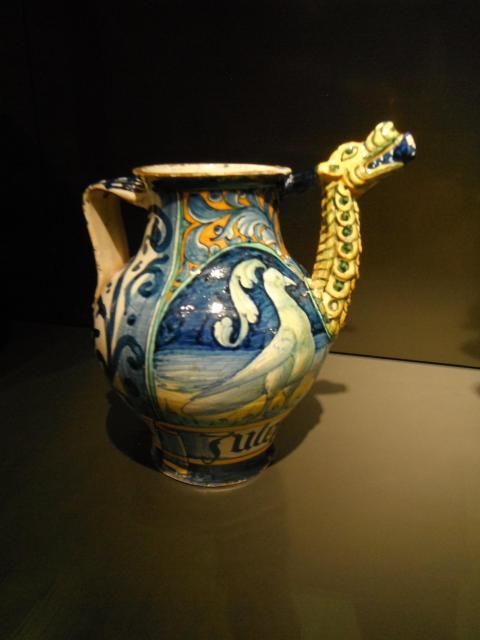
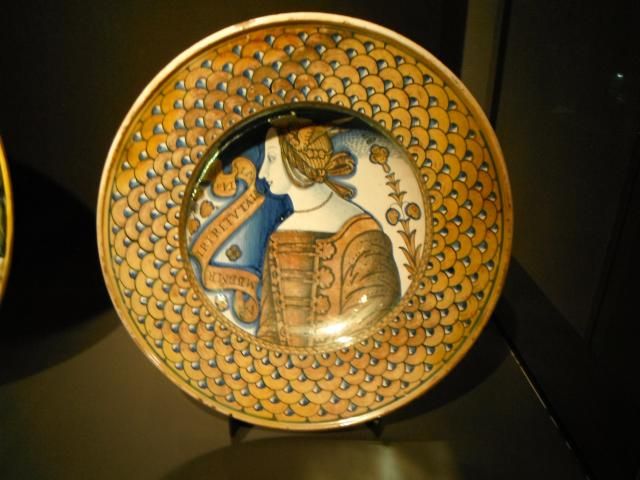
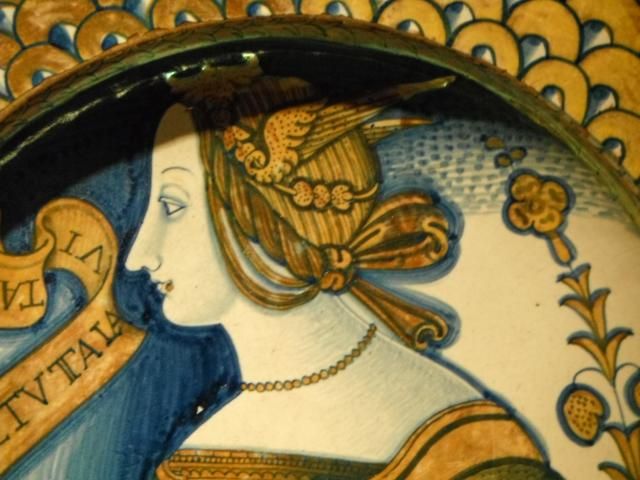
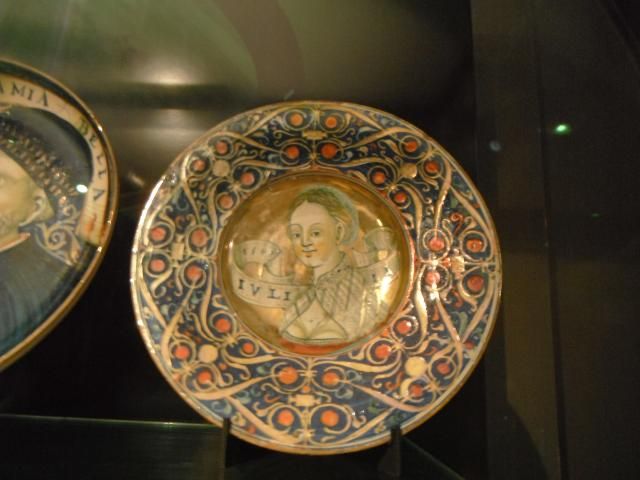
Things in the Rijks Museum

Dragon Jug featuring plumed pidgeon.

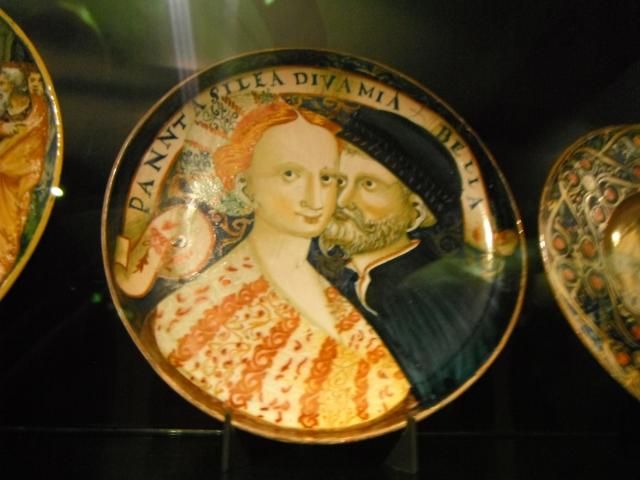
Plates!

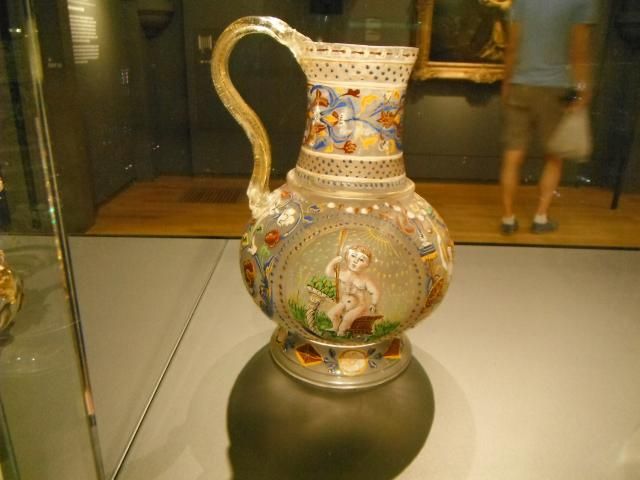
Painted glass jug


Monday, 11 August 2014

Project 34 - Krae Glas baronial birthday platter PT 4

Step 4 - Apply shading.

In step three I tried two different methods of shading. Method one mixed 50/50 yellow and black (lower belly) and method 2 diluted the black (one drop black to three drops water) and used it as a wash. Pre-firing they both looked a bit sketchy but the black wash went on smoother. Post-firing, the black wash is chunkier and doesn't present the smooth grading I need for this project.

For the final piece I decided to go with the black wash but this time I diluted it 1:5 and mixed it extremely well to ensure there were no chunks of pigment. The wash went on nicely. The shading turned out pretty well. The only thing I'd change next time would be the shading on the back of the sea-dragons. It should be horizontal not vertical allowing it to conform to the shape of the beast better.

I picked up the plate the morning of the event, and as usual, forgot to get a photo.

Project 34 - Krae Glas serving plate for Day of Honour 2014 - Picture by Baron Cormac.

Wednesday, 6 August 2014

Project 34 - Krae Glas baronial birthday platter PT 3

Step 3 (should have been step 2): Determine the colour pallet. Experiment on a piece of scrap ceramic with blends and shades of glaze. The fired piece gives a good approximation of how the finished glazes will look and will guide my technique. One thing is for sure, I'm going to need a finer brush or more steady hand.


Monday, 4 August 2014

Ceramic treasures

During our recent trip to Europe, we took a side trip to Italy. To be specific: Sicily to see volcanos. While in Sicily I had the opportunity to pick up some lovely ceramics. These are the lovely things I couldn't help but bring home. I'll post picks of some of the items that stayed behind later.


First up is what we've taken to calling the wine fish. This thing was a challenge to bring home with all it's knobbly bits. I was so worried something would get knocked off during the day and a half of plane flights. The winefish has three candle holders as his crest and a mouth wide enough to hold a bottle of wine, or salt or sliced bread. Under the blue glaze he also has scales carved into his body.  I've never seen anything like him in my research but I tend to look at plates and cups so I'll have to do some more digging to document him.
This is the wine fish in his new home next to the plate and dish I also acquired. The shop-keeper called these "pre-majolica". I'm going to spend some time soon looking for the museum pieces that inspired these designs.  I am so glad these made it back to Australia with me. Soon I'll have an update on what I've found out about the artist, the inspiration pieces and the items I had to leave behind.
Sunday, 3 August 2014

Project 34 - Krae Glas baronial birthday platter PT 2

Step 2: Determine your colour layout. I spent some time with a basic sketch of the elements trying to decide which colours would go where. I've determined that the four main seabeasts will be gold, while the rest of the design will be blue. I may skip the red of the original images to retain the balance, and the Krae Glas colour scheme.


The yellow elements were painted first, then the octopus and the Krae Glas populous devices. Finally the wave motif was painted in and the whole background was given a simple blue wash. I contemplated using a different blue for the background but decided that if I was careful enough the depth of glaze would be apparent. I haven't used a wash since trying to duplicate patina on my first plate. I hope this works out well.


Monday, 7 July 2014

Project 34 - Krae Glas baronial birthday platter PT 1


So this project is going to be both complex and time consuming. It is due mid August for the Krae Glas baronial birthday event, Gionnata de honnor (or whatever it is this year). I started it about a month ago, but accidently knocked my heater over and smashed it (above) . As I'm starting over (and I have a phone, with camera now) I've decided to document all the steps I can...


Extant plate: 1525, Italy. The Met Museum, item no. 41.100.277

(Pre-step - rummage in the Met, V&A, British museum and all other resources to find extant pieces that fit your requirements. Eventually settle on one main design, print sections of this for reference later.)

Step 1: Take some tracing paper and trace around the outside of your dish. The fold this in half and trace the design elements you like onto one half of the sheet. Reverse the fold and trace over your half design. This results in a lovely mirror image. It took me three hours to get the shapes and balance right on the smashed plate. I'm not completly copying the extant piece as I don't like the creepy cherub faces or the random fruits. I wasn't entirely happy with some of the elements on the smashed plate, so I spent another hour tweaking them while doing the tracing (thus the chunkier left dolphin)


Step 2: On the wrong side of the tracing, rub a 6B pencil, as shown in the top half of the above image. Ensure all lines are covered in pencil dust THEN go wash your hands.

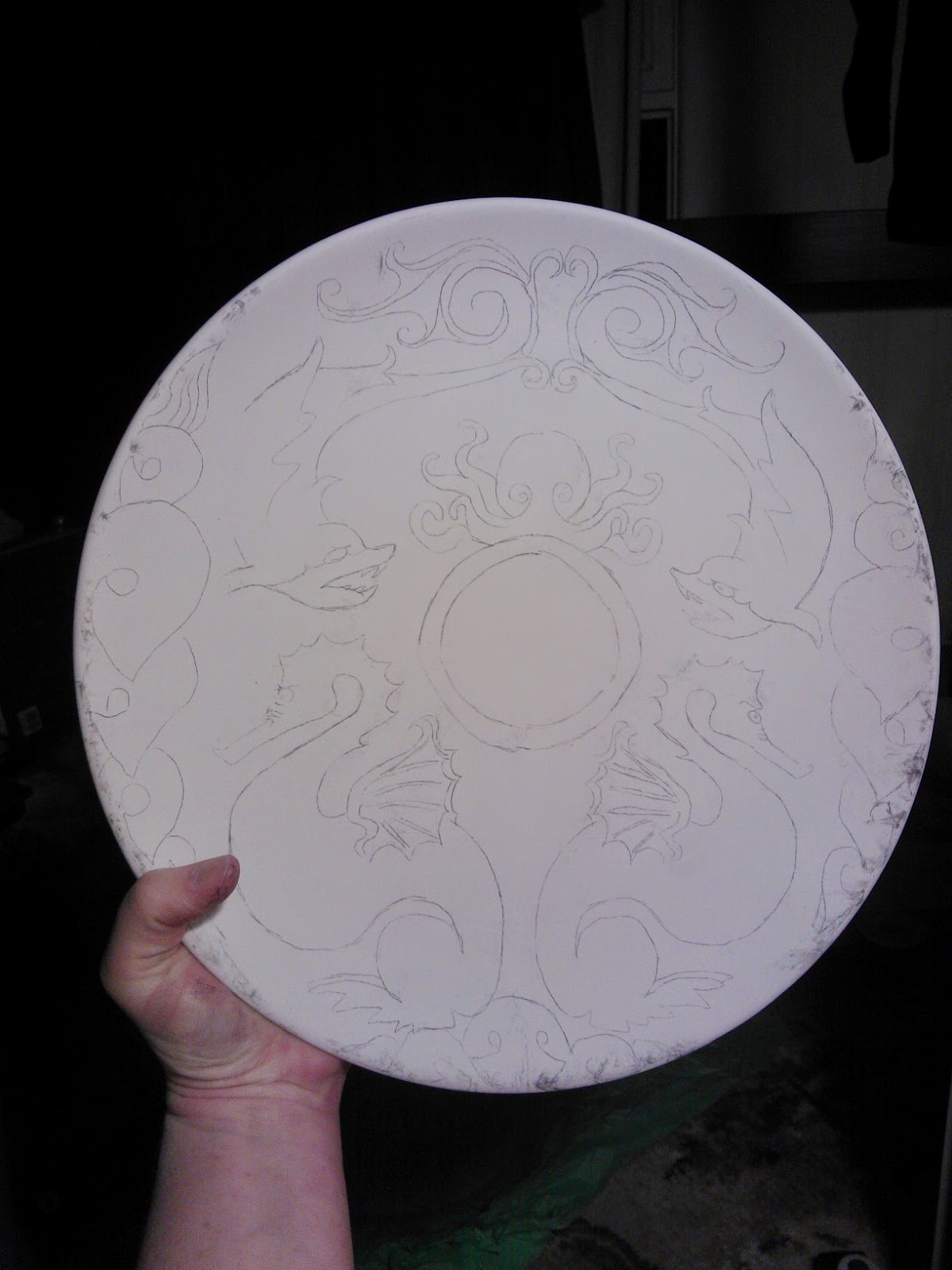
Step 3: Lay the tracing paper on the plate, pencil side down. Carefully draw over your original design. When you remove the paper, the pencil rubbings should have transfered your design across. Don't worry about the rubbings, they'll burn off in the kiln.


More steps to come as I complete them, stay tuned....