Sunday, 17 June 2018
Ajanta caves
Monday, 30 April 2018
Product review - Helmar Fray Stoppa
Brand: Helmar
Use: Stop loosely woven fabric from fraying.
Pros:
Helmar is an Australian company
Easily available from Spotlight.
Washable
Flexible
Cons:
Does absorb into fabric but some sits on top of the cloth
More of a glue texture, so it creates 'strings' which can be really annoying when working with silk etc.
3/5
Thursday, 1 March 2018
Block printing experiments
Friday, 16 February 2018
Some Sancai things I really like
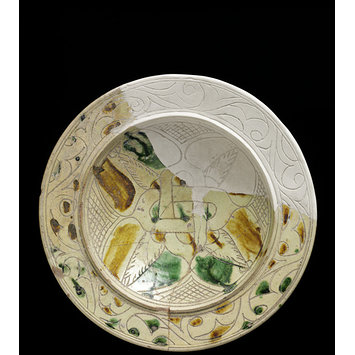
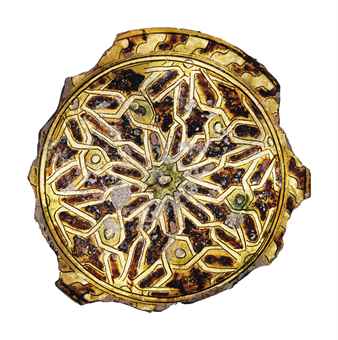
Sancai refers to a glazing tradition from China's Tang dynesty (~600-900 CE) which utilises green, purple and brown glaze. The glaze is lead based laid on white earthenware items. Due to the mobile nature of the glaze, if often has carved borders to assist in retaining the glaze. Some scholars suggest the Chinese dishes influenced the sgraffito work of Europe.
The final image in this post indicates that even when the art forms of glazing was highly refined, the translucent green was utilized despite it's dubious nature.
Sunday, 28 January 2018
UFO - Mr. Men dress upgrade
I've just finished upgrading this UFO. I made this dress from a tennis dress pattern in 2004/5 (specifics are faint). The fabric came from a reclaimed bedsheet and as you can see, I was more concerned with conserving fabric than matching the print.
I love this dress but I had made the hem a little short. Luckily, in my fabric conserving spirit I had made the hem very wide. So, I was able to unpick it and lengthen the dress by a good 10cm. Unfortunately, wear on the hem had left pale lines in the print. I solved that through the application of trim (which probably cost more than the original fabric). The green trim covers the original hem line and the blue covers the fold.
If I had a do-over, I'd pattern match and maybe flare the skirt a bit more. That said, I still have the other bed sheet in the set, I could make another once my UFO stack is down to a more manageable size. It'll have to wait though, my two UFO complete per one new project is going well and I'm looking forward to tackling some ceramics next.
Thursday, 18 January 2018
Yellow bugs in Western Australia
Cleaning up images my phone and I found this critter - a Trichiocercus sparshalli. This fuzzy caterpillar turns into a white / silver moth. Apparently they can be found across Australia but the eastern states are more likely to have the red sub-species.
With water in the Pilbara being so scarce, if the local hive finds a readily available source, they all turn up for a drink. I strongly advise capping all drinks and using sippy straws to avoid the bee-in-the-mouth issue.
Tuesday, 26 December 2017
Purple flowers in the Pilbara
Wednesday, 1 November 2017
Crafting with paper lanterns
The party was fantastic and the company delightful. I especially liked the colour-coded cocktails in their lovely teapots and the test tube glasses. The propaganda posters were also most excellent.
Thursday, 14 September 2017
Pilbara wildflowers
I have no idea what species these flowers are, but they are a beautiful splash of colour in an otherwise red and dusty environment.
Monday, 28 August 2017
Pennsic block printing haul - follow up
Sunday, 20 August 2017
First time using a pottery wheel
Under the expert direction of Master Simon I made a howl. I threw it using a foot powered wheel and then it was fired onsite at Pennsic. I tried to decorate it like a 14th Spanish example but the glaze was not really cooperating. So proud of myself. It did develop a crack because the base was a little too thick and it dried slower than the rest of the pot.
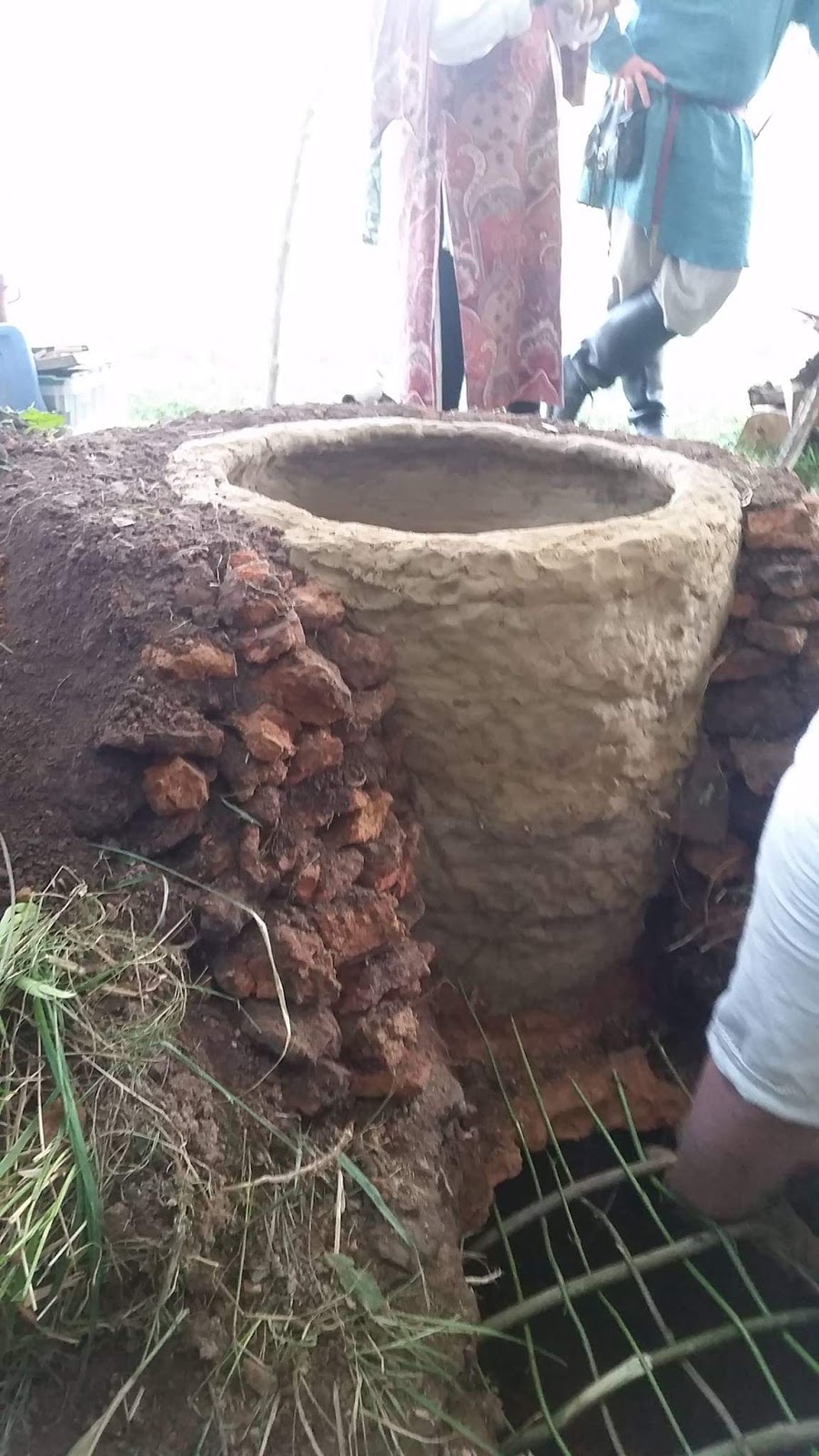
This is the half built woodfired kiln which is constructed onsite from Pennsic clay to fire all the things. :)
Thursday, 10 August 2017
Pennsic block printing haul
Stay tuned for experimental updates!
Wednesday, 9 August 2017
Lino block printing - initial experiments
More details, and early learnings on my next update!
Monday, 24 July 2017
Printing with rubber stamps - follow up
I wondered if changing the paint thickness might help with resolution and repetition. The results of my experiments are as follows:
Monday, 17 July 2017

Qasam and the Kashani cobalt
As a side note, the presence of copper-gold in the area would have provided minerals for glaze and lustre while the nearby lead-zinc deposits allowed for the transparent lead glaze that resulted the beautiful underglaze ceramics (6).
Why Kashan rather than Ghamsar?
When creating blue glaze, cobalt commonly composes <5% of the overall blend (8). The low concentrations required make transporting the washed cobalt the short distance to the source of clay highly viable.
1: A new tectonic scenario for the Sanandaj–Sirjan Zone (Iran) 2005 A. Ghasemia, C.J. Talbotb Journal of Asian Earth Sciences.
2: Porphyry Copper Deposits of the Urumieh-Dokhtar Magmatic Arc, Iran. 2005. A. Zarasvandi, M. Zentilli, S. Liaghat.
3: The Ay Qalasi deposit: An epithermal Pb-Zn (Ag) mineralisation in the Urumineh-Dokhtar Volcanic Belt of northwestern Iran. DOI: 10.1127/njma/2015/0284
4: Geology of the Sari Gunay Epithermal Gold Deposit 2006 Northwest Iran. by J.P Richards, D. Wilkinson and T. Ulrich. Economic Geology. DOI: 10.2113/ gsecongeo.101.8.1455 .
5: Ore Mineralization at Qamsar Cobalt Deposit:Skarn and Metasomatism Evidences . Hadi Mohammaddoost, Majid Ghaderi, Nematollah Rashidnejad-Omran The 1st International Applied Geological Congress
6: Islamic pottery, a brief history. Metropolitan Museum of Art.
7: Soils of Iran 1961. M.L Dewan, J. Famouri. Food and Agriculture Organisation of the United Nations.
8: Ceramic Arts Network, accessed 31/12/2018.
Saturday, 1 July 2017
block printing with rubber stamps
Not this blog post! Nope.
Today my criteria for a craft activity required not leaving the house and the ability to stay in my PJ's all day. So I had to come up with a project that used supplies already on hand. Rather than teach you how to block print, I'm going to discuss different methods I'm trying over the next couple of posts.
Block printing with rubber stamps.
You will need to:
1 - acquire a friend who sends you rubber stamp when she thinks you'll like them. Alternatively, head to Art Riot or your local scrapbooking store and buy up some rubber stamps sold for embossing card and whatnot.
2 - acquire some fabric. (Or save some from being thrown out). Wash, dry and iron it flat.
3 - scrounge up some paint. I'm using left over Pebeo fabric paint from a previous project. You can also blend JoSonya's fabric medium 50x50 with acrylic paint.
4 - grab a foam brush or sponge. You need to apply a thin even coat of paint to the block. Having no sponge, I cut down one of my silk painting brushes. Apparently you can use a paint roller and paint pallet too.
Place your fabric on a towel or wool blanket covered table. Back it with newspaper to prevent bleed through. Dab a thin coat of paint on the block. Press firmly to the fabric and peel off carefully. Repeat many many times. Rinse all tools. Iron as directed by your paint. Done!
Learnings:
Rubber blocks work well and the stamps have well shaped wooden backs to help you press down.
The old Pebeo is a bit sticky and could probably be watered down. (Watered down works better)
Measurements won't necessarily work as you lose or gain space between applications.
It takes a while to cover a distance with a small stamp. (I listened to two Hello Internet episodes).
My bags aren't square so I get uneven prints where the paper won't quite fit.
Frequent stamp washing helps avoid accidental paint build up and a toothbrush makes a good scrubbing tool. (Must buy new toothbrush).
Next I'll try a clear plastic stamp kit I found at Kmart to see if that fixes my alignment issues.
Tuesday, 13 June 2017
Squwark plate
![]() |
| Bowl. Iran, Nishapur 10th century. Earthenware, buff slip, underglaze slip-painted,. LACMA M.73.5.289. (No direct link is possible, check out items 30 and 52 of 99) |
![]() |
| The finished plate complete with a variety of personalized chickens. |
I'm really happy with how this turned out. The green/yellow/white/black contrast looks great and is appealing to modern tastes as well. I only hope Phillipa likes it as much as I do.
1) The Met at Nishapur. http://www.metmuseum.org/toah/hd/nish/hd_nish.htm
2) Sgraffito from Nishapur. http://www.metmuseum.org/blogs/ruminations/2015/production-history-of-sgraffito-ware-from-nishapur
3) The extant plate - http://islamic-arts.org/2011/ceramic-vessel-collection-at-lacma/
Friday, 9 June 2017
Pelican outfit #7: The completed outfit
Thursday, 8 June 2017
Pelican Outfil #6 - The hat and wings
Wednesday, 7 June 2017
Pelican Outfil #5 - Test collar & dress
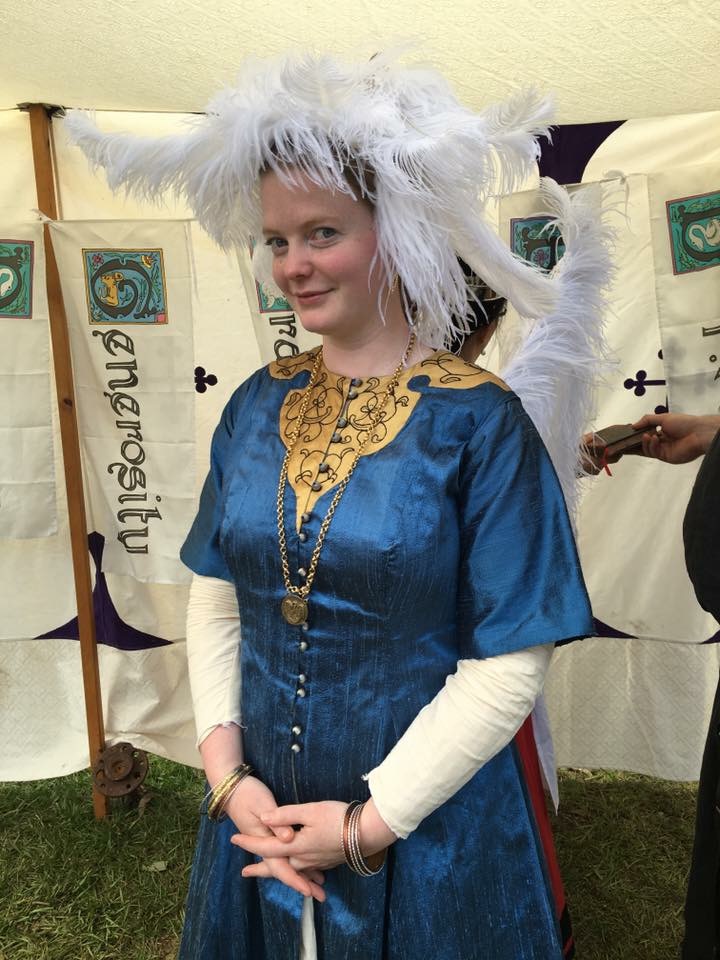
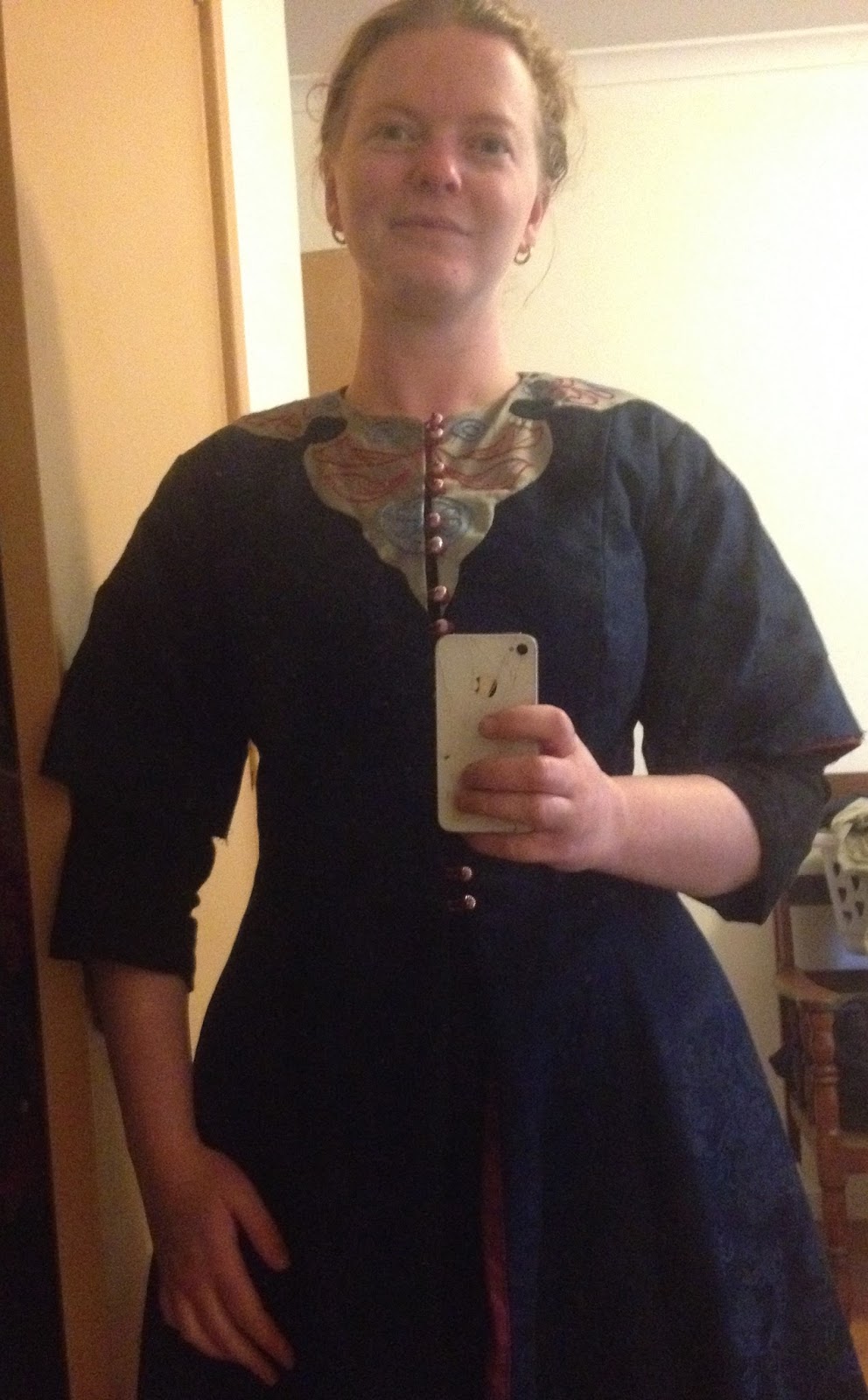
I made another test piece with a dark blue brocade (with modern roses). I designed a collar of silver silk with red and blue silk embroidery. The intent of this was to test our my patterning skills, my embroidery skills and to create a backup outfit just in case I didn't get the final one done in time. In the end, the Lovely Iglasia wore the backup and we looked fantastic!
The embroidery was a simple design based on some of the pottery I'd been working on. I started by tracing my collar pattern onto the silk using a washable marker pen. I included a seam allowance and then free-handed the design. Once I was happy with the design, I simply tensioned it using a cane hoop and split stitched my way around each of the symbols and created