I present Wisdom of the Ages, part I. And by ages, I mean my grandfathers pottery diary he kindly gave me when he realized I was interested in glazes. Originally I didn't realize how valuable this little notebook was, but it contains years of experiments and notes on glazes and firing regimes so I have decided to transcribe some of it here so it won't be lost when he passes on and I eventually lose the book or die myself. This book was written by a man who can write in 7 languages and speak 10. Before coming to Australia he worked as a translator in The Netherlands. Once here, the only positions he could find to support his family were menial jobs, such as working on the production lines of a moccasin or glass factory.
He is a thin wiry man who enjoys digging holes in outback Australia and looking for opals even though he's had a triple bypass. As the only grandparent I have left he continues to impress me and each time I see him I do my best to learn more about him before he's gone forever.
In transcribing his book, please forgive the spelling mistakes or random words. Poppa writes in a beautiful flowing cursive hand which can be difficult to translate at times.
Decorating with slips or engobe
Slips or engobe is a mixture of clay, water and colouring oxides. The most refined form (Terra sigillata?) seived through 200 mesh mill burnish to a high polish without glazing.
Stir the slip regularly, otherwise it will separate. Dip the pot briefly, the shake off any drips.
Cut out paper stenciles. Sponge the newsprint carefully onto the surface. Dip. When dry, the paper stencil can be peeled carefully away.
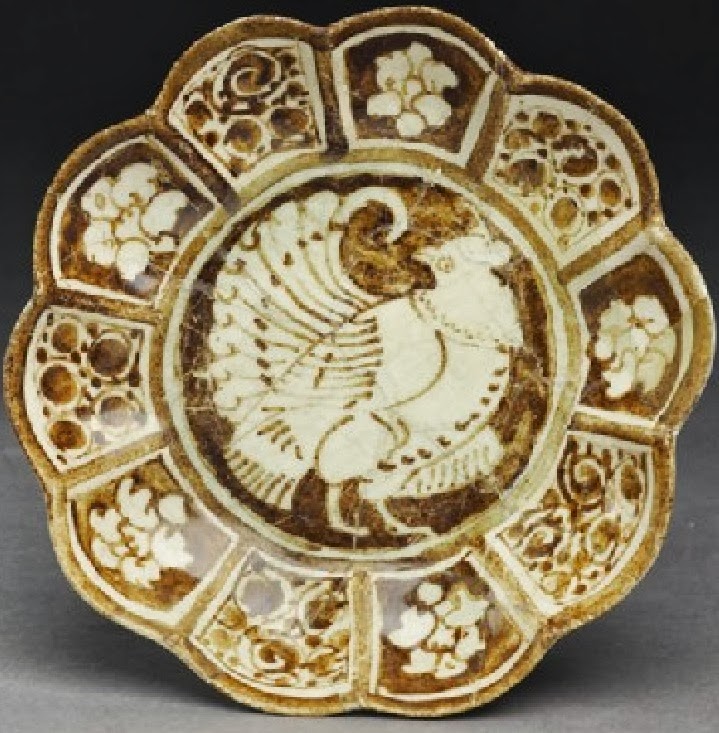
In sgraffito ? decorating the dipped slip is scratched away in lines or areas, to reveal the contrasting colour of the clay beneath.
When using terra sigillata on a fine clay surface, leave the pot after it returns to leatherhard for some tume until it is almost starting to dry out. Then polish the surface with the back of a metal spoon..
In slip braiding, the slip is piped through a rubber bull in the manner of icing a cake. Experiment on leatherhard clay; any mistakes can be easily sponged off. Before starting, expell all air from the container - shake it to make the air rise to the surface; then gently squeeze it out
Trailing on a wet ground, horizontal surfaces can be covered with an even layer of slip - then trail a contrasting slip onto the set surface. Work quickly and when finished, tap the supporting board to flatten the slip covered surface.
Marblling is done as above with a variety of trailed slip colours in a simple design of lines or blobs. Just leave off tapping the board, agitate it with a quick circular motion until the slip colours begin to swirl into each other.
Feathering is draggin thin strands of one colour of braided slip into another using a single broom bristle on a pen.
Cut plastic foam into a variety of shapes and use these to sponge slip onto the leatherhard surface.
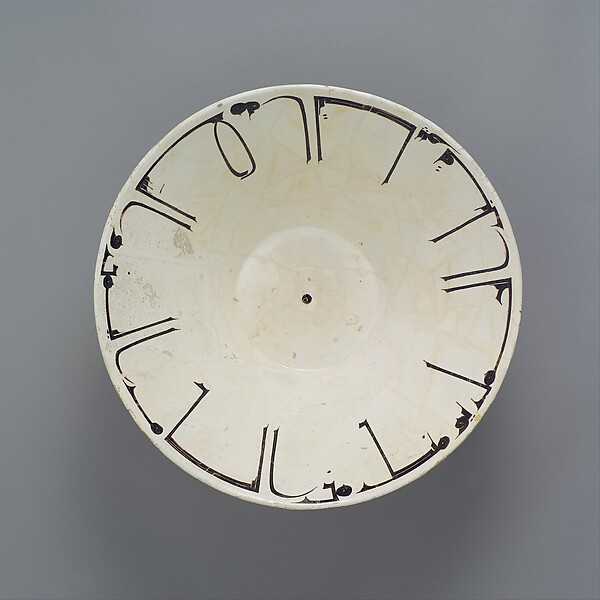
10th C Bowl, Iran. White Engobe / Slip has been scratched to crate a decorative border which states "Planning before work protects you from regret; prosperity and peace".
Met Museum of Art, Accession No. 65.106.2.