Showing posts with label Teaching. Show all posts

Monday, 17 July 2017

Qasam and the Kashani cobalt

As outlined in previously, Kashan, Iran seems to be the initial production site of Blue on White ceramics. This is due to Kashan's proximity to a source of cobalt and other minerals useful in creating glazes. The Kashani cobalt originates from Qamsar aka Ghamsar which is located in the hills south of Kashan. Ghamsar is located proximal the the boundary between the Sanandaj-Sirjan Zone (1) (associated with the subduction of the Neo-Tethys Ocean) and the Urumieh-Dokhtar Arc. The U-D Arc hosts porphyry copper-gold deposits (2) as well as epithermal lead-zinc deposit (3).

Figure1: Geology of Iran - adapted from Geology of the Sari Gunay Epithermal Gold Deposit (4). The blue star marks the location of Kashan and to the south, Ghamsar (aka Qamsar).

The cobalt in Ghamsar is formed as part of a skarn deposit (5) resulting from the intrusion of a microdiorite into the Qom Formation. For non-geologists, the limestone in the Qom Formation is dissolved by the hot hydro-thermal fluids originating from intrusion of diorite, a volcanic rock. The contact between these two rock types metamorphises and recrystalises becoming the skarn deposit. The mineralology of a skarn is determined by the composition of the hydrothermal fluids and the limestone. The Ghamsar deposit appears to be structurally controlled, with the mineralising fluids travelling through faults. The cobalt is spatially associated with magnetite veins in the faults however the cobalt may precede the magnetite ore. The cobalt (smaltite) likely took the form of a silvery metal and would have been locally processed and washed before transport. Cobalt glaze requires less than 5% cobalt to achieve a rich blue colour. Thus it is a valuable and highly transportable product. Given the comparative weights, the washed cobalt, and other metals, would have been transported to markets in nearby cities.

Summary: Due to the unique geological processes and structures involved, precitipation of cobalt ore is rare and unlikely to be accessible at surface in a form useful for glaze production.

As a side note, the presence of copper-gold in the area would have provided minerals for glaze and lustre while the nearby lead-zinc deposits allowed for the transparent lead glaze that resulted the beautiful underglaze ceramics (6).

Why Kashan rather than Ghamsar?

We can see why ceramics are produced at Kashan instead of Ghamsar, the source of the ore, by consulting a soils map. Figure 2 indicates that the soils around Ghamsar are calcareous lithosols which are calcium rich, and often contain chunks of partly or fully unweathered rock. They are calcareous (calcium rich) as their parent rock is likely the limestones of the Qom Formation. Kashan, on the other hand, has a source of salt marsh soils. Salt marshes are a low energy environment which accumulate sediment over long periods of time. Marsh soils are typically fine grain and well sorted, these appear to be grey and low in organic matter. Small grain clays require less work for the potter to purify and create into fine earthenware. The clay would likely have been dried, ground and sifted before being utilised.

When creating blue glaze, cobalt commonly composes <5% of the overall blend (8). The low concentrations required make transporting the washed cobalt the short distance to the source of clay highly viable.


Figure 2: A map of the soils of Iran indicates which medieval towns would have superior clay. (7)


1: A new tectonic scenario for the Sanandaj–Sirjan Zone (Iran) 2005 A. Ghasemia, C.J. Talbotb Journal of Asian Earth Sciences.

2: Porphyry Copper Deposits of the Urumieh-Dokhtar Magmatic Arc, Iran. 2005. A. Zarasvandi, M. Zentilli, S. Liaghat. PGS Publishing, Linden Park, 2005. pg 441-452

3: The Ay Qalasi deposit: An epithermal Pb-Zn (Ag) mineralisation in the Urumineh-Dokhtar Volcanic Belt of northwestern Iran. DOI: 10.1127/njma/2015/0284

4: Geology of the Sari Gunay Epithermal Gold Deposit 2006 Northwest Iran. by J.P Richards, D. Wilkinson and T. Ulrich. Economic Geology. DOI:. 

5: Ore Mineralization at Qamsar Cobalt Deposit:Skarn and Metasomatism Evidences .  Hadi Mohammaddoost, Majid Ghaderi, Nematollah Rashidnejad-Omran  The 1st International Applied Geological Congress

6: Islamic pottery, a brief history. Metropolitan Museum of Art.

7: Soils of Iran 1961. M.L Dewan, J. Famouri. Food and Agriculture Organisation of the United Nations. 

8: Ceramic Arts Network, accessed 31/12/2018.

Monday, 29 December 2014

Some research into "Blue on White" Ceramics

 Figure 1: The Blue Willow Pattern first popularized by Minton (1)  in 1780, and readily available at your local Woolworths.


This research project was initiated as a response questions from Master Crispin regarding blue on white ceramics at Fields of Gold 2014. I knew the basics such as the significant influence of Chinese (Ming)ware on the European market but I didn't know if this was a stylistic influence or something else. (turns out it's practical, higher firing temperature creates stronger ceramics and cobalt is stable at these temperatures). Given that 'Blue on White' is a wide topic I started as I usually do, hitting up my favourite museum collections for some extant samples. I've stored these on pinterest, tried to assemble a small collection of representative pieces and a timeline. I've also collected quotes from various sources that relate to the pieces above them. For some reason vases seemed to be a thing and it's interesting to see the motifs and shapes changing over time and cultures. This is a HUGE topic which I only touch on but I feel this research essay is sufficient generalist background as I conduct additional research for each project as well. Where possible I've utilized primary sources (extant objects) but have referenced a number of secondary or tertiary sources as well. Additional reference material is provided at the end and I've put this one behind a cut because it's a massive post and reasonably picture heavy.

Sunday, 12 October 2014

St Monicas ceramic class - results

I did a trail run of my ceramic hands-on A&S class at St Monicas during the AGM three weeks ago. I ran this for three reasons, 1. Beth was about to give birth and wanted to make a pair to the octopus cup before the baby came and 2. I plan on running this at Krae Glas and Stormhold and needed to know how to format it. 3. We were having the AGM and it's good to provide quiet crafty activities while the paperwork gets sorted.

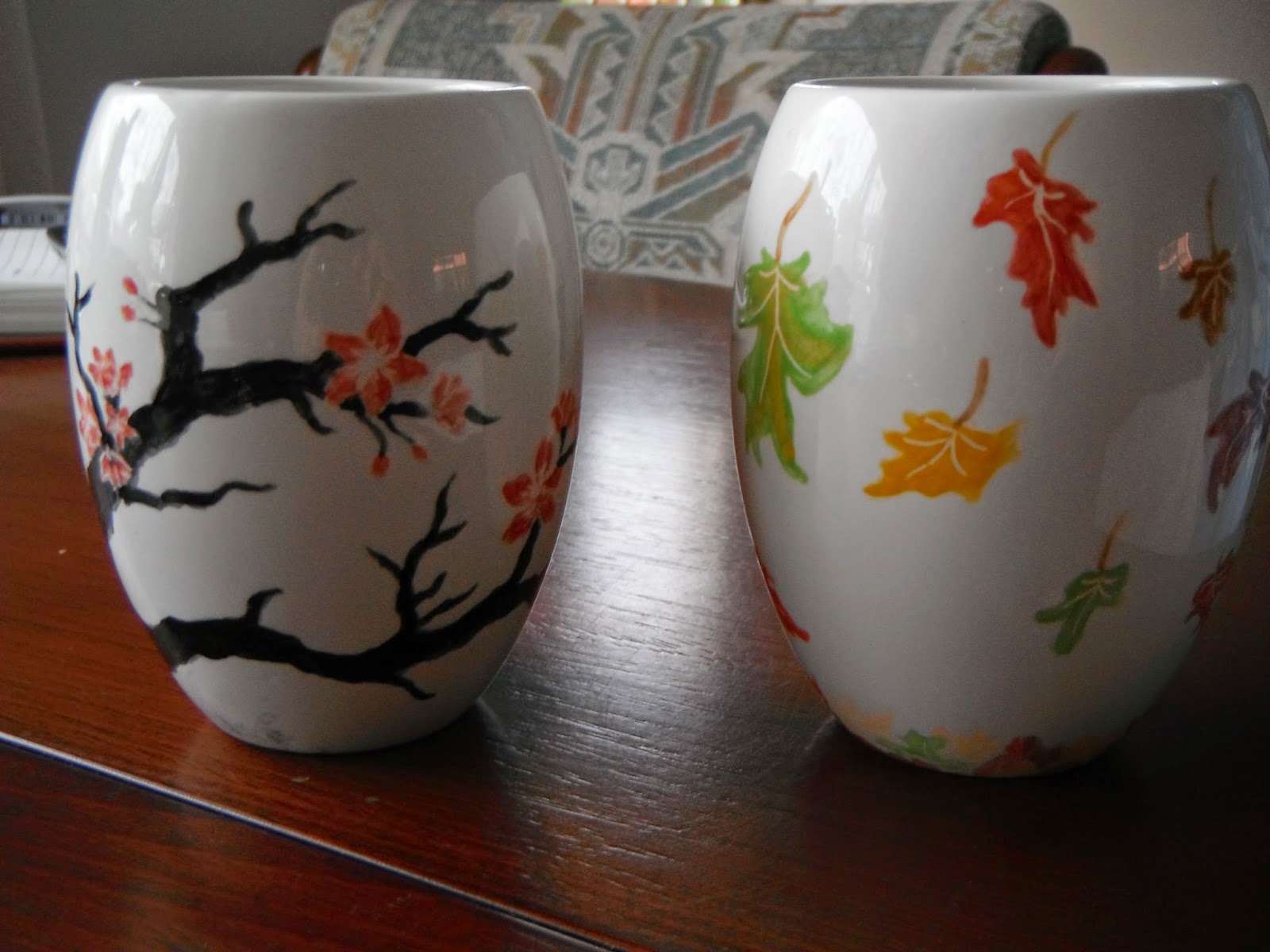
6 people ended up painting ceramic objects which I didn't anticipate. 3 cups (Beths is still to be fired) and three tiles (because I had them sitting around). Louisa's skills blew me away (the bamboo) and I especially like the cups by Janet and Vivien. Vee was also interested but couldn't settle on a design, so she's doing research until I run the Krae Glas session.


Pre-firing Post-firing


Things for next time:
  • Bring more bisque if possible - people standing around tend to want to join in.
  • Bring more examples to prevent artists-block
  • Supervise EVERYONE as the concept of "a little glaze" has multiple interpretations.
  • This is not a class for children unless they are supervised by their parents (especially younger ones)
  • Don't buy a pack of pencils just for the 6B, people are likely to utilise the wrong ones accidentally.
  • Don't feel awkward about charging for materials.
  • Explain dark over light shading and three layers multiple times, with examples if possible.
  • Don't plan on doing any work yourself.


Friday, 25 April 2014

A brief introduction to Indian Garb

I taught my first ever A&S class at Rowany Festival this year (off the cuff ones at the college don't count! (for those Americans playing at home - Lochac has 'College of St whoever' which is the local University group sponsored by a host Barony)). It was a rather simplistic class and aimed to introduce more people to the saree. It involved some talkie talkie but was mostly a hands-on, here's a couple of ways to drape a saree class. I actually taught the class twice and a bit as some people missed it and asked for some private lessons. Hopefully I'll be seeing more sarees around the place and perhaps an Indian persona or two. Perhaps next year I'll do a class on choli tops - I am getting rather sick of creepy men telling me it's not period.

Anyway, I digress, my notes:

A Brief Introduction to Indian Garb

Antoinette Travaillie, Kingdom of Lochac.


Figure 1 Gujari Ragini from a Ragamala series ca. 1600 Color on paper
H: 19.6 W: 14.5 cm  Malwa, India F1937.36. Smithsonian Museum of Asian Art
 

The Sari
The sari is simple a piece of folded and draped cloth. Typically the cloth ranges from 3 to 9 meters long depending on the drape style and intent of the wearer. While many cultures have developed their own styles, India is unique in the widespread retention of the unsewn garment. One scholar suggested this is due to the pieced (sewn) fabric being unclean and thus unable to be worn by Hindu priests. There are many ways of draping a sari. The styles change by time period, region, occupation, class and wealth.


Figure 2: Ajanta - cave 1, listening to the sage. Shows some lovely ikat fabric, and extremely variably clad individuals.

Most people are familiar with the sari as depicted in paintings after the Mughul Empire was established (Figure 1) however there has been a huge variety of styles and forms through out the medieval period. The image above comes from the Ajanta / Ellora cave complex which is a sequence of Buddhist caves painted from 1-6th CE. The images depict men and women wearing a variety of draped and sewn fabrics.
During this class we will be practicing three styles of draping derived from cave paintings, statues and assisted by ‘Saris: An illustrated guide to the Indian Art of Draping’. The first is termed the flower sellers drape, the second is the fishtail drape which can be altered to create a variety of styles and the final is the veshti-mundu which I find to be a comfortable drape that can easily be altered to suit whatever activities I’m undertaking.


Figure 3 Jain Art - Queen Trisala's joy at the confirmation of her conception, Gujarat. 1400-1500 Metropolitan Museum of Art


Due to humidity and a tradition of burning the dead, there are no extant examples of period saris that I am aware of. Gujurat (on the west coast) was a major trading port and did export fabric around the Indian Ocean. Some samples of block printed fabric have been recovered from Fustat, Egypt. Due to these factors most of what we know about saris comes from cave paintings, statues and later, manuscripts. There are a number of period patterns (see below) that can still be found in Sari shops today such as simple geometric block printing, Ikat fabrics (patterns dyed into threads and then woven together) and embroidered designs. Period saris can be made out of silk, wool, linen or cotton. Purchase the type of fabric that fits your desired drape, cotton is good at holding pleats, art silk is more slippery and will conform to your shape better heavy brocades fall beautifully and are especially good for fishtails but can be challenging to keep draped over the shoulder.  

Figure 4 Block printed cotton, mordant dyed Gujarat India 1470-1550 The ‘hamsa (goose)’ is an ancient motif in Indian art. It occurs in early sculptural reliefs and in mural paintings of the Gupta period (320-about 540 AD), as seen at Ajanta cave complex It is an auspicious motif and was favoured for dress design from the Gupta period. The attribution date for this object is around 1510 (+ or - 40 years) by radiocarbon-14 dating.

Figure 5 Women, Virupaksha Temple, Vijayangara, 16th century. South Indian Painting, pg. 96.

Some basic language I've found useful when shopping:


Pallau – this is the decorative edge on your sari. This may be a meter of highly embroidered fabric or a simple trim to match the hem of your garment.

Fall – often online advertisements will mention a pre-sewn fall. A fall is a strip of fabric sewn to the bottom of the sari. The fall protects delicate embroidery from your feet and provides added weight allowing the pleats to fall pleasingly. Pre-sewn falls are usually sewn for a left to right drape.


Pre-sewn – Pre sewn sari’s come with folds presewn into them. This takes the guess work out of draping the sari. These are hard to purchase off the rack in medieval prints / fabrics


Art Silk – This often means artificial silk. It’s much smoother, much hotter and takes dyes much better. Some shops use this to mean artistic silk. These saris are usually painted in non-traditional designs and may also be made out of artificial fabrics.


Figure 6 Queen Sembiyan Mahadevi as the Goddess Parvati Chola dynasty, 10th century India Freer Gallery of Art, Washington DC


Useful books:


Saris: An illustrated guide to the Indian Art of Draping, 1997, Chantal Boulanger, Shakti Press International. ISBN: 0966149610

A multitude of variations of 1800-2000 era draping styles with step by step instructions. VERY useful and highly recomended for drape variety and language

Indian Court Painting, 1984, Andrew Topsfield, Victoria and Albert museum ISBN 0112903835

16th – 19th C paintings of the Muslim and Hindu schools in Northern Indian and the Deccan

The Ajanta Caves, Ancient Paintings of Buddhist India, Benoy K Behl, Thames and Hudson. ISBN 0500285012

189 colour images of Buddhist caves painted between 1st-6th C CE. I cannot recomend this enough, hundreds of references for a huge range of things.

Indian Painting, 1993, Pratapaditya Pal, Los Angeles County Museum of Art, ISBN 0510934655

1000-1700, divided by region/artistic style. Not as much in early period as I'd like but there never will be.

South Indian Paintings, 1968 C Sivaramamurti, Ministry of Information and Broadcasting, ISBN 8123000529

Divided by culture with line drawing interpretations of poorer images

Textiles & Dress of Gujarat, Eiluned Edwards, V&A publishing ISBN 9781851776450

Modern but contains good historical overview of textiles, including dying and embroidery.